





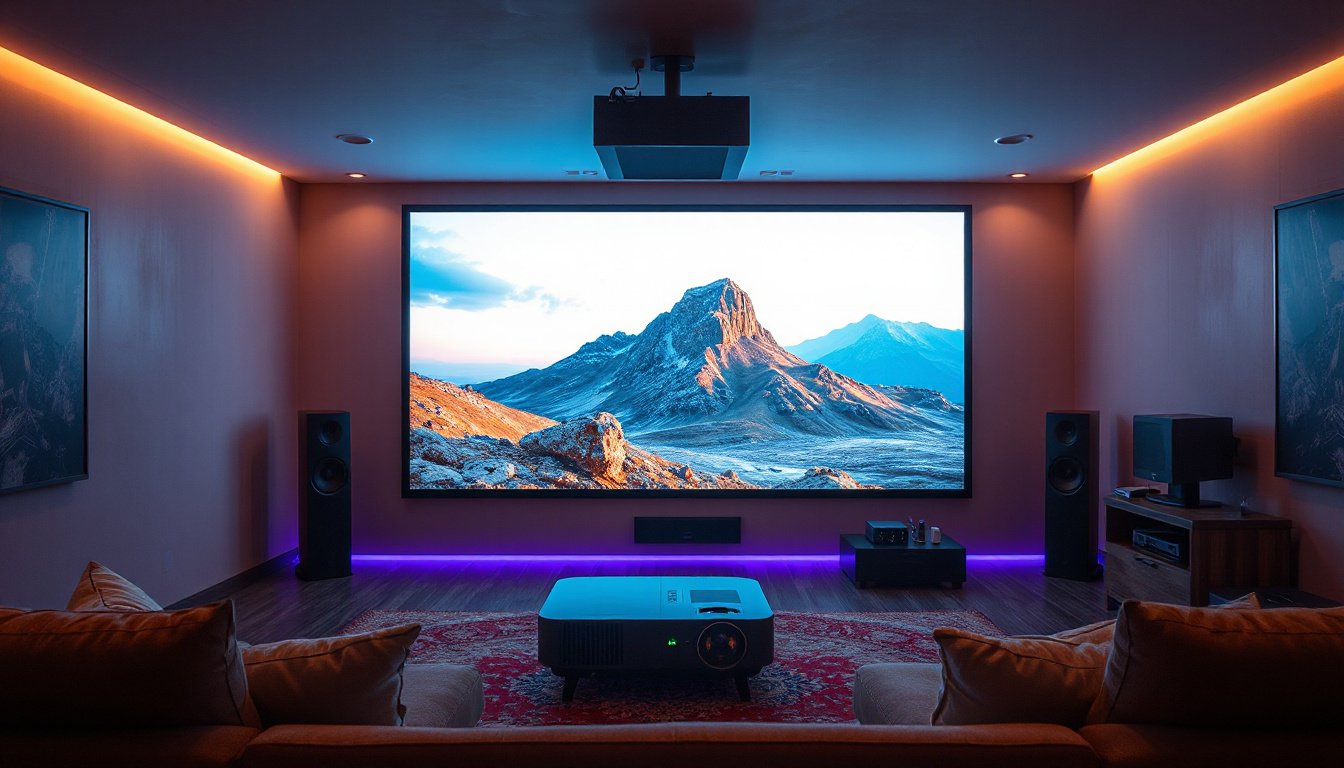
The realm of home theater projectors has witnessed remarkable technological progress over the years, with several display technologies vying for the attention of enthusiasts. Among the three dominant technologies—Digital Light Processing (DLP), Liquid Crystal Display (LCD), and Liquid Crystal on Silicon (LCoS)—LCoS projectors stand out for their combination of superior image quality and immersive viewing experience. This comprehensive guide aims to unravel the technology, benefits, and considerations of LCoS projectors, helping you make an informed choice to elevate your home cinema.

Understanding LCoS Technology
Liquid Crystal on Silicon (LCoS) is a reflective microdisplay technology that incorporates a liquid crystal layer atop a silicon backplane. Unlike traditional transmissive LCD projectors where light passes through liquid crystal panels, LCoS works by reflecting light off liquid crystal layers modulated on silicon chips. This reflective nature allows LCoS to achieve higher pixel density and more precise light modulation.
In the projector’s light engine, white light is split into red, green, and blue beams. Each beam reflects off its dedicated LCoS panel, which modulates the light to create grayscale images. These modulated beams are then recombined through a prism to form a full-color image projected onto your screen.
Historical Context and Evolution
Originating from advanced developments in the 1970s and 1990s, LCoS projectors were initially large and utilized in commercial and military applications such as flight simulators. Over time, advances such as Sony’s SXRD (Silicon X-tal Reflective Display) and JVC’s D-ILA (Direct Drive Image Light Amplifier) evolved LCoS into a compact, high-resolution option for home theater use.
Why Choose LCoS Projectors for Home Theater?
Outstanding Native Resolution
LCoS projectors offer the highest native resolution among the three mainstream projector types. While other technologies rely on pixel-shifting or sub-frame blending to simulate 4K resolution, many LCoS projectors deliver true native 4K, using chips with approximately 8 million individually addressable pixels for fine image detail and sharpness.
Superior Contrast and Deep Blacks
Thanks to precise light modulation, LCoS yields exceptionally deep black levels and high native contrast ratios. This capability outperforms DLP (which struggles with true blacks due to light leakage) and LCD (which is transmissive and limited in black performance). For movie enthusiasts demanding cinematic quality and shadow detail, LCoS excels in producing rich, immersive images with nuanced dark scenes.
Smooth, Film-like Image Quality
LCoS projectors combine the strengths of LCD and DLP but avoid common drawbacks such as the rainbow effect in single-chip DLP projectors. With dedicated panels for red, green, and blue and reflective optics, LCoS delivers vivid colors with smooth gradients, minimal pixelation, and no distracting color splitting artifacts.
Large and Quiet Designs for Dedicated Viewing Spaces
Given their three-chip architecture, LCoS projectors tend to be larger and more robust, often incorporating advanced optics and quiet cooling systems. This makes them perfect for dedicated home theaters where space and noise control are less restrictive.
Comparing LCoS with Other Projector Technologies
| Feature | LCoS | DLP | LCD |
|---|---|---|---|
| Native Resolution | High (often native 4K with ~8M pixels) | Varies; uses pixel-shifting, perceived 4K | Varies; pixel-shifting for faux 4K |
| Contrast & Blacks | Superior; deepest, true blacks | Good, but limited by mirror gaps | Moderate; black levels improved by dynamic iris |
| Color Reproduction | Rich, smooth, film-like | Bright, sometimes subject to rainbow effect | Bright and colorful, no rainbow effect |
| Physical Size | Usually larger, robust builds | Compact and portable | Mid-sized; varies by model |
| Price Range | Higher-end, premium pricing | Affordable to mid-range | Mid-range, affordable options available |
| Maintenance | Requires calibration; possible pixel persistence issues in early models now largely resolved | Low maintenance; sealed optics avoid dust issues | Moderate; potential convergence issues over time |
Key Considerations When Buying LCoS Projectors
-
Budget: LCoS projectors are typically more expensive than DLP or LCD models. Prices reflect their premium performance and sophisticated optics, making them a worthy investment for dedicated home theater enthusiasts.
-
Room Environment: Because LCoS projectors excel in producing deep blacks and high contrast, they perform best in controlled lighting conditions where ambient light is minimized.
-
Space: Due to their chassis size and cooling needs, LCoS models suit permanent installations in larger media rooms rather than portable setups.
-
Screen Selection: Maximize your projector’s image quality by pairing it with an appropriate projection screen. The screen’s gain, color, and ambient light rejection properties significantly influence perceived contrast and color fidelity.
The Future of Home Theater Projection with LCoS
LCoS is evolving steadily, with manufacturers integrating features like High Dynamic Range (HDR) support and improving light source technologies (like laser illumination), pushing image quality beyond previously imaginable frontiers. As 4K and beyond content becomes mainstream, and streaming services deliver richer cinematic experiences, LCoS projectors enable home theaters to rival commercial cinemas.
Conclusion
LCoS projectors represent the pinnacle of home cinema projection technology by combining native 4K resolution, stunning contrast, and smooth color reproduction into a premium viewing experience. While they require a higher investment and dedicated setup, their visual quality advantages make them an outstanding choice for cinephiles and enthusiasts seeking to unlock the ultimate home theater ambiance.
When selecting a projector, consider your specific viewing environment, budget, and priorities. If exceptional black levels, true 4K resolution, and immersive cinematic quality are paramount, LCoS projectors are poised to unlock the future of home theater enjoyment.
Further Reading
- Understanding the differences between LCD, DLP, and LCoS projectors.
- How projection screen choice impacts image quality.
- Latest trends in laser light sources for home theater projectors.
This guide synthesizes expert projector reviews, technology analyses, and technical overviews to demystify LCoS projectors and help you create an unparalleled home cinema experience.