





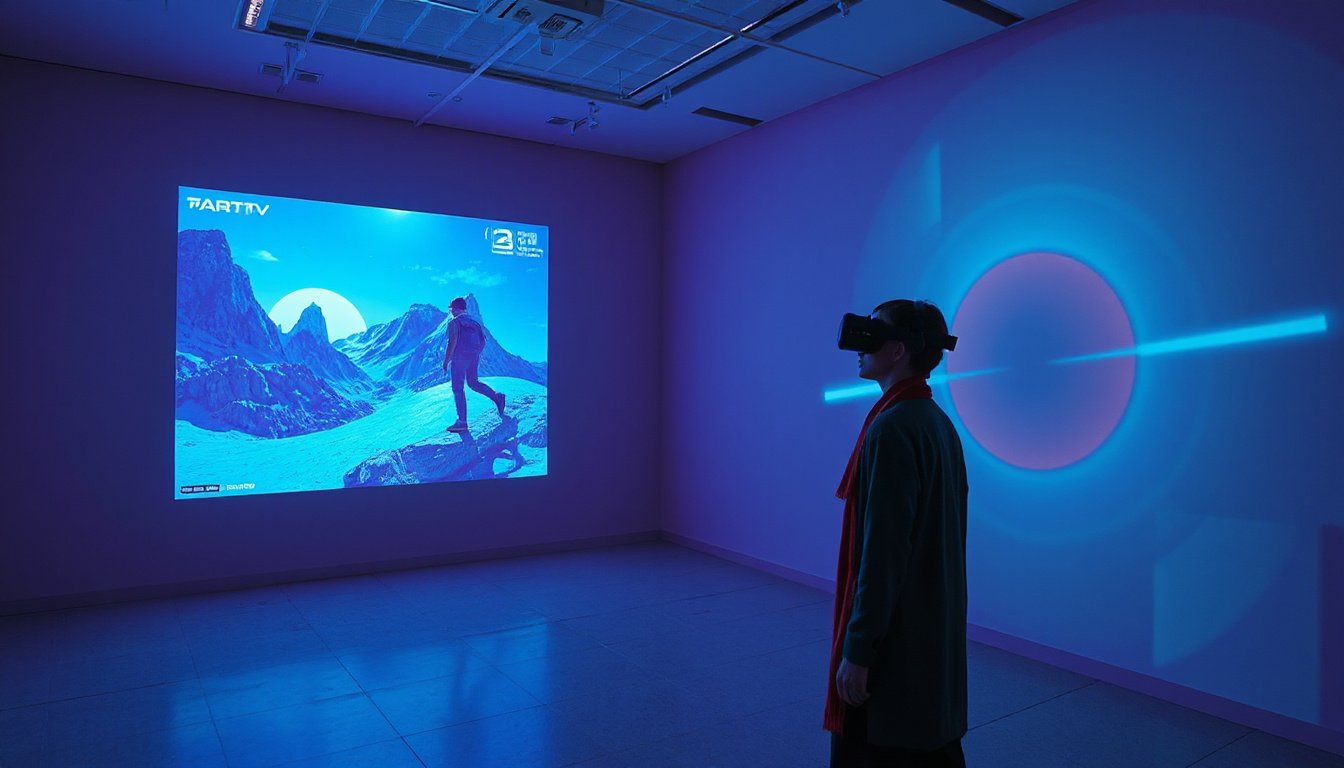
Virtual reality (VR) traditionally evokes images of bulky headsets and tethered experiences. However, an evolving and exciting frontier in VR technology is emerging: the use of projectors to create immersive, shared virtual environments without the need for head-mounted displays. This approach blends physical and digital worlds by transforming rooms into dynamic VR spaces with vivid, 3D projections. Here’s everything you need to know about using projectors for VR setups and why this method is revolutionizing how we experience virtual reality.

What Is Projection-Based VR?
Projection-based VR relies on multiple high-resolution projectors and specialized projection screens to create large-scale virtual environments that surround users. Instead of wearing headsets, participants are immersed by images cast on walls, floors, and even ceilings, enabling a collaborative and social VR experience.
This technology is a modern evolution of the CAVE (Cave Automatic Virtual Environment) systems from research labs, once confined to universities and enterprises due to their complexity and cost. Today’s projector-based VR systems are far more compact, accessible, and versatile—capable of fitting into offices, labs, or even domestic spaces.
How Does VR Projection Technology Work?
1. The Projection Screen
Unlike regular movie screens, VR projection surfaces are often high-gain, acoustically transparent, and engineered for perfect image fidelity from extreme viewing angles. Some employ retroreflective materials to ensure light returns directly, maintaining vivid, geometrically accurate visuals regardless of the user’s location in the room.
2. Projectors
Multiple laser projectors work in concert, edge-blended seamlessly to create a breathtaking panoramic or wraparound virtual scene. These projectors deliver bright, sharp images that overcome ambient light, crucial for maintaining immersion in diverse environments.
3. Tracking and Software Rendering
The system uses an array of infrared cameras, depth sensors, and sometimes LiDAR to track users’ head and body movements in real time. This data feeds into a powerful rendering engine that dynamically adjusts the image perspective, creating a realistic parallax effect. As users move, perspectives shift naturally—enhancing the illusion of depth and space without motion sickness or discomfort often associated with headsets.
Benefits of Using Projectors for VR
Social Interaction and Collaboration
One of the standout advantages is the inclusivity of the experience. Multiple participants can share the same virtual environment simultaneously, seeing not only the digital content but also each other through lightweight 3D glasses. This arrangement fosters communication, teamwork, and social interaction—something headsets tend to limit due to their isolating nature.
Comfort and Accessibility
Without the need for face-worn displays, users avoid common complaints such as headset discomfort, eye strain, or motion sickness. This ease of access opens VR to a broader user base, including those who might otherwise be hesitant or unable to use traditional VR hardware.
Freedom of Movement
Projection VR setups are untethered. No cables connect the user to a computer, allowing natural movement within the physical space with no risk of tangling or tripping.
Immersive Visuals and Field of View
Projectors can create large-scale, ultra-wide fields of view that encompass peripheral vision seamlessly. This advantage can produce a more realistic and enveloping VR experience than some headset displays with narrower fields of view.
Practical Applications Beyond Gaming
While immersive gaming is an obvious use case, projector-based VR opens doors across diverse sectors:
-
Architecture and Design: Walk through virtual buildings or prototype vehicles at full scale, assessing nuances that 3D models on a screen cannot reveal.
-
Education and Training: Students can explore complex subjects such as space exploration or human anatomy interactively; medical professionals can rehearse surgeries, improving confidence and outcomes.
-
Corporate Visualization: Data presentations become immersive 3D spaces users can navigate collaboratively, enhancing understanding of complex datasets.
-
Therapy and Healthcare: Projection VR supports therapies including exposure treatment for phobias and addiction research, providing controlled, safe environments.
Common Projection VR Configurations
-
Single Wall or PowerWall Systems: Use one projector to turn a wall into an interactive display, suitable for presentations or design review.
-
Corner Projection: Two projectors create an over-180-degree view by projecting onto adjoining walls, increasing immersion while keeping physical footprint minimal.
-
Multi-Sided Installations: Larger facilities can implement three or four-sided projection environments, or even wraparound rooms, delivering fully enveloping experiences.
Challenges and Considerations
-
Cost and Space: Though more affordable than earlier CAVE systems, projectors and specialized screens still require investment and dedicated space.
-
Lighting Control: Ambient light can wash out images; setups typically demand rooms with controlled or dim lighting.
-
Tracking Limitations: The experience depends on accurate tracking; stepping beyond calibrated zones or occlusions can disrupt immersion.
-
Setup Complexity: Proper calibration of projectors and alignment of images for smooth blending require technical expertise.
Despite these hurdles, ongoing advances in projector technology, wireless tracking, and software sophistication are steadily reducing barriers.
The Future of Projection-Based VR
In the coming years, projection VR systems are poised to become more compact, affordable, and capable. Innovations such as haptic feedback floors, AI-driven adaptive environments, and hybrid systems combining projection with wearable devices are set to deepen immersion and broaden applications.
Envision personal living rooms or classrooms effortlessly transforming into portals to other worlds without donning headsets. The shift is moving from solitary, screen-bound VR towards open, communal, spatial virtual experiences that engage multiple senses and users simultaneously.
Conclusion
Using projectors for VR setups represents a cutting-edge, socially enriching step forward in virtual reality technology. By projecting vibrant, interactive digital worlds onto physical spaces, users gain comfort, freedom, and collaborative possibilities that conventional head-mounted VR cannot match.
Whether you pursue this technology for entertainment, education, enterprise collaboration, or specialized research, projection VR offers a powerful, immersive, and inclusive doorway to new virtual realities—without ever putting on a headset.
Explore the potential of projector-based VR and transform your perception of virtual reality today.