





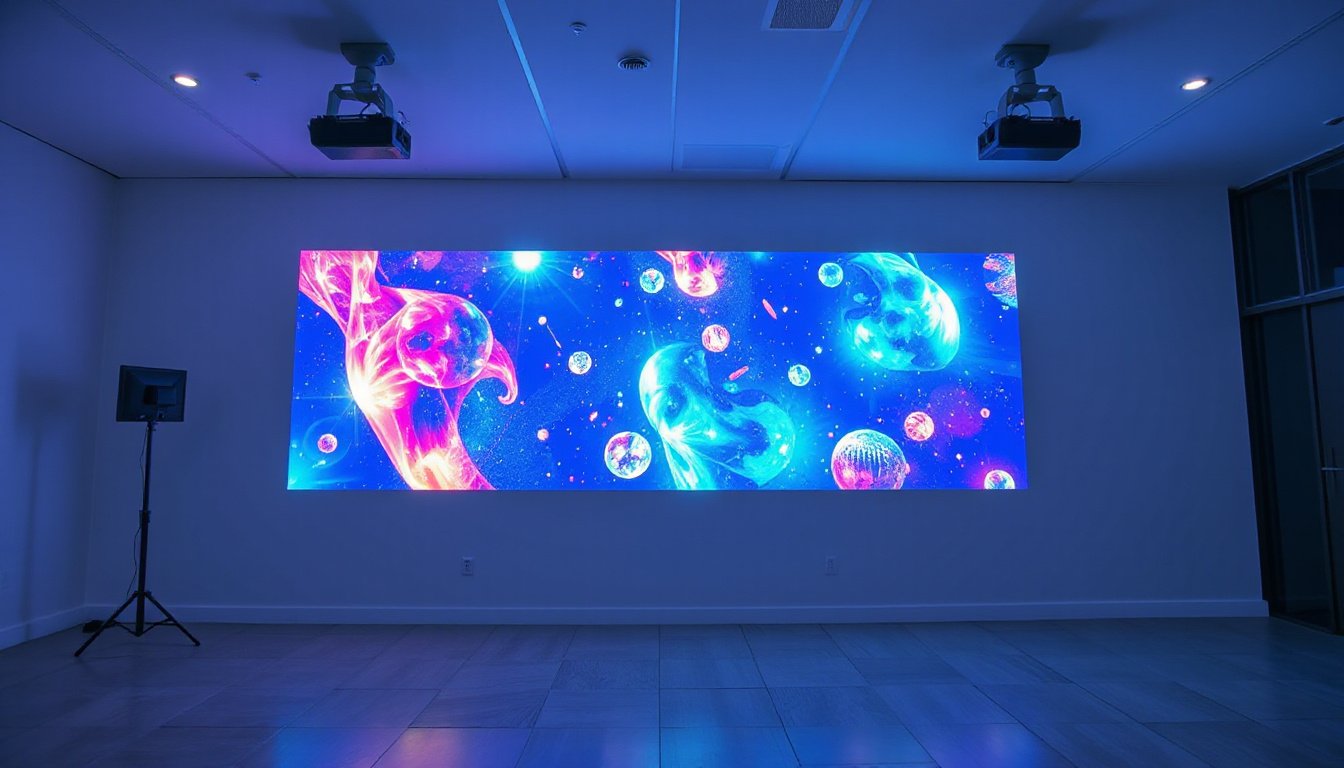
In the realm of visual display technology, the demand for immersive, large-scale, and high-quality imagery is rapidly expanding across industries. Whether for captivating presentations, museum exhibits, or interactive installations, creating seamless visuals that stretch beyond the confines of a single projector is a game-changer. This is precisely where projector edge blending enters the spotlight, offering a sophisticated solution that elevates visual experiences by merging multiple projector outputs into one flawless image.
What Is Projector Edge Blending?
Projector edge blending is a technique used to stitch together the overlapping edges of images from multiple projectors to form a single, continuous display. Rather than placing several projected images side by side — which often results in visible seams, brightness differences, and color inconsistencies — edge blending softly overlaps these borders and finely tunes brightness and color to achieve a smooth transition.
The technology typically involves:
- Overlapping projection areas: Slightly overlapping the edges of adjacent projector outputs.
- Brightness and color adjustment: Harmonizing the intensity, gamma, and color temperature so that overlaps uniformly blend.
- Image warping and geometry correction: Refining the alignment and shape of each projected image to compensate for projection angles or surface irregularities.

All these combined elements make the final large-scale image appear as if it originated from a single projector, thus creating an immersive and visually striking unified display.
The Core Benefits of Projector Edge Blending
1. Seamless Large-Scale Visuals with Enhanced Resolution
Edge blending allows multiple projectors to combine their outputs into one expansive image with increased overall resolution. This is a critical advantage for venues requiring overwhelming visual impact, such as conferences, concerts, museums, or digital signage. The resulting display captures audience attention by offering vivid, crisp images across vast surfaces without distracting gaps or seams.
2. Superior Color and Brightness Uniformity
Unlike traditional multi-projector setups that “butt” images side by side, edge blending technology expertly balances color temperature and luminance across all projectors. This delivers consistency and prevents uneven brightness or color mismatches that can break immersion and reduce visual quality.
3. Greater Flexibility with Projection Surfaces and Shapes
Image warping, an integral part of edge blending, compensates for irregularities in projection surfaces — including curved, angled, or non-flat screens. This makes it possible to create panoramic, wraparound, or dome projections, further enhancing the immersive experience in installations such as planetariums, museums, and themed events.
4. Scalability and Versatility for Different Applications
Edge blending systems can be scaled up to incorporate many projectors, opening creative possibilities for large venue stages, architectural projections, and educational environments. It supports:
- Interactive installations
- 360-degree panoramic displays
- Multi-screen presentations
- Dynamic product launches
By converging multiple images without losing clarity or quality, edge blending is ideal for any scenario demanding large, seamless visuals.
5. Cost Efficiency Over Ultra-Large Single Displays
Constructing enormous displays using single, ultra-high-end projectors or LED panels is often prohibitively expensive and logistically complex. Edge blending enables the use of several more affordable projectors to work in unison, achieving comparable or superior visual size and resolution at a more manageable cost.
Key Considerations When Using Edge Blending
Achieving the full benefits of projector edge blending hinges on precise setup and calibration, including:
- Projector positioning: Careful geometric placement ensures the images overlap correctly.
- Color calibration: Matching color profiles across devices prevents visible differences.
- Fine-tuning the blend curve: Adjusting the fade gradients in the overlap zones ensures smooth transitions.
- Choosing the right equipment: Selecting projectors with appropriate throw ratios, brightness levels, high contrast, and resolution is vital. Integration of dedicated edge blending controllers or specialized software enhances precision and ease of configuration.
Conclusion
Projector edge blending represents a transformative technology in large-display environments, enabling the creation of flawless, vivid, and expansive visuals that engage audiences and convey messages with impact. By merging multiple projected images into a single cohesive display, it traverses the limitations of single-projector setups, offering enhanced resolution, color uniformity, flexibility, and scalability. Whether for professional AV integrators, event organizers, or creative technologists, mastering edge blending unlocks a new realm of visual brilliance and immersive storytelling potential.
Explore the power of projector edge blending to create stunning, seamless visuals that redefine how audiences experience imagery.