







Proper storage temperature is a critical factor that determines the quality, efficacy, and safety of various products, ranging from pharmaceuticals and biologicals to food items and chemicals. Understanding the definitions, regulatory standards, and best practices related to storage temperature ranges helps ensure optimal preservation and compliance with applicable guidelines. This article explores essential concepts and practical guidelines to master storage temperature ranges effectively.
Understanding Common Storage Temperature Terms
Terminology related to storage temperatures such as "ambient," "room temperature," "cold chain," "refrigerated," and "frozen" often appear on product labels. However, these terms can vary by region, regulatory body, or industry sector, causing confusion if not explicitly defined.
Regulatory and Pharmacopoeial Definitions
Various pharmacopeias and organizations define these terms as follows:
| Term | European Pharmacopoeia (Ph. Eur.) | WHO Guidelines | U.S. Pharmacopeia (USP) | Japanese Pharmacopoeia (JP) |
|---|---|---|---|---|
| Frozen / Deep Freeze | Below -15°C | -20°C | Not specifically defined | Not specified |
| Refrigerator / Cold | 2°C to 8°C | 2°C to 8°C | Not exceeding 8°C | 1°C to 15°C |
| Cold | 8°C to 15°C | 2°C to 8°C | <8°C | 1°C to 15°C |
| Cool | 8°C to 15°C | 8°C to 15°C | 8°C to 15°C | Not specified |
| Room Temperature | 15°C to 25°C | 15°C to 25°C | Prevailing working area temperature | 1°C to 30°C |
| Controlled Room Temperature | Not specified | Not specified | 20°C to 25°C with allowed excursions (15°C to 30°C) | Not specified |
| Warm | Not specified | Not specified | 30°C to 40°C | 30°C to 40°C |
| Excessive Heat | Not specified | Not specified | Above 40°C | Not specified |
| Ambient Temperature | Not clearly defined | Surrounding temperature, often 15°C to 25°C or up to 30°C depending on climate | Not defined | Not defined |
Key Insight: Terms like "ambient" or "room temperature" may not always equate to standard temperature ranges globally. For this reason, experts recommend specifying precise temperature ranges (e.g., 15°C–25°C) instead of ambiguous descriptors for storage and transportation labels.
Storage Temperature Ranges and Their Importance
Maintaining products within their specified storage temperature range preserves integrity by slowing degradation, preventing microbial growth, and maintaining potency. This is crucial in fields such as pharmaceuticals, food safety, and biological research.

Pharmaceutical and Biotechnological Products
- Cold chain management: Products susceptible to heat or freezing should be transported and stored under continuous temperature control, known as the cold chain, typically 2°C to 8°C.
- Avoiding freezing: Certain liquids and semi-solids can be damaged by freezing. Explicit instructions to "protect from freezing" must be included on labels where applicable.
- Temperature excursions: Controlled room temperature products may allow limited short-term temperature deviations if the mean kinetic temperature remains within limits to preserve stability.
Food Products
Proper storage temperature ensures food safety, nutritional quality, and shelf life:
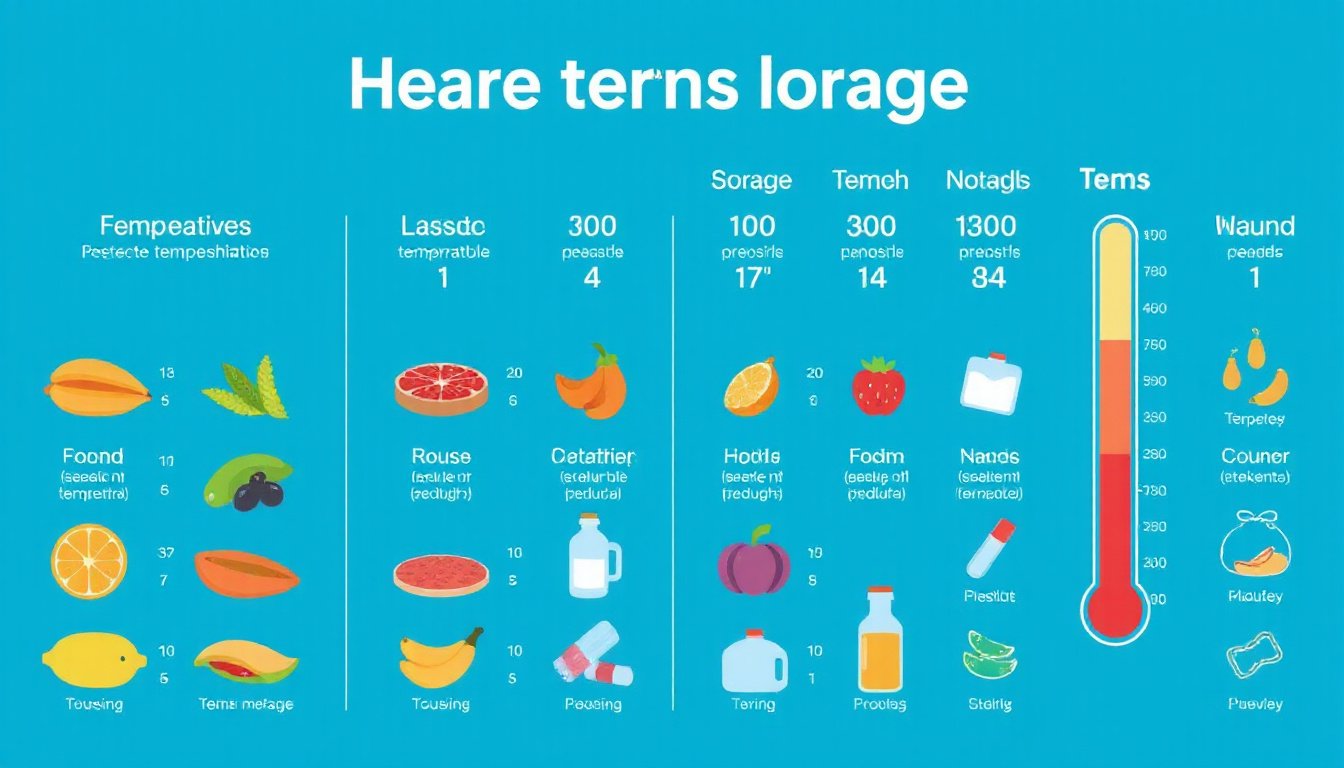
- Dry goods: Ideally stored in cool, dry locations between 10°C and 15°C (50°F to 59°F) to reduce spoilage and pest infestation.
- Refrigerated foods: Should be kept at 4°C (39°F) or below to prevent bacterial growth; dairy products specifically require 2°C to 4°C.
- Fresh produce: Most need 2°C to 4°C to maintain freshness but with exceptions like bananas and potatoes, which prefer 10°C to 15°C.
- Fresh meat, poultry, seafood: Typically stored between 1°C and 4°C to inhibit spoilage with special handling such as ice packing for poultry and seafood.
- Frozen foods: Must be stored at −18°C (0°F) or below to maintain quality; temperature fluctuations can cause discoloration and nutrient loss.
Best Practices for Maintaining Storage Temperatures
- Explicit Temperature Labeling: Always specify temperature ranges numerically on labels and packaging rather than general terms to avoid confusion.
- Temperature Monitoring: Use calibrated thermometers and data loggers to monitor storage environments continuously.
- Controlled Storage Facilities:
- Utilize thermostatically controlled refrigerators, freezers, and climate-controlled rooms.
- Maintain clean, dry, and pest-free storage areas.
- Avoid Temperature Excursions:
- Minimize door openings in refrigerated units.
- Use insulated containers during transport.
- Maintain cold chain integrity for sensitive products.
- Stock Rotation:
- Apply First-In, First-Out (FIFO) method to prevent expiry and wastage.
- Proper Segregation:
- Separate raw from cooked or ready-to-eat products, especially in food storage.
- Use designated zones within refrigerators and storerooms.
- Regular Maintenance: Schedule professional servicing for refrigeration and freezing equipment.
Summary
Mastering storage temperature ranges is fundamental for product preservation, quality assurance, and regulatory compliance. Given the varying definitions of temperature descriptors worldwide, it is best practice to:
- Specify exact temperature ranges in Celsius or Fahrenheit on product labels.
- Protect sensitive products by maintaining stringent cold chain conditions.
- Monitor and control storage environments to prevent temperature excursions.
- Follow industry-specific guidelines and regulatory requirements for storage and transportation.
By adhering to these principles, businesses can safeguard product integrity, extend shelf life, and ensure safety for end users.
References:
- European Pharmacopoeia, Chapter 1.2
- WHO Guidelines on Storage Conditions
- United States Pharmacopeia <659> Packaging and Storage Requirements
- Japanese Pharmacopoeia
- EMA Guideline on Declaration of Storage Conditions
- Food Safety, Sanitation, and Personal Hygiene (BCcampus Open Education)
Mastering storage temperature ranges empowers you to optimize preservation, minimize risks, and maintain high standards for your products, no matter the industry.