





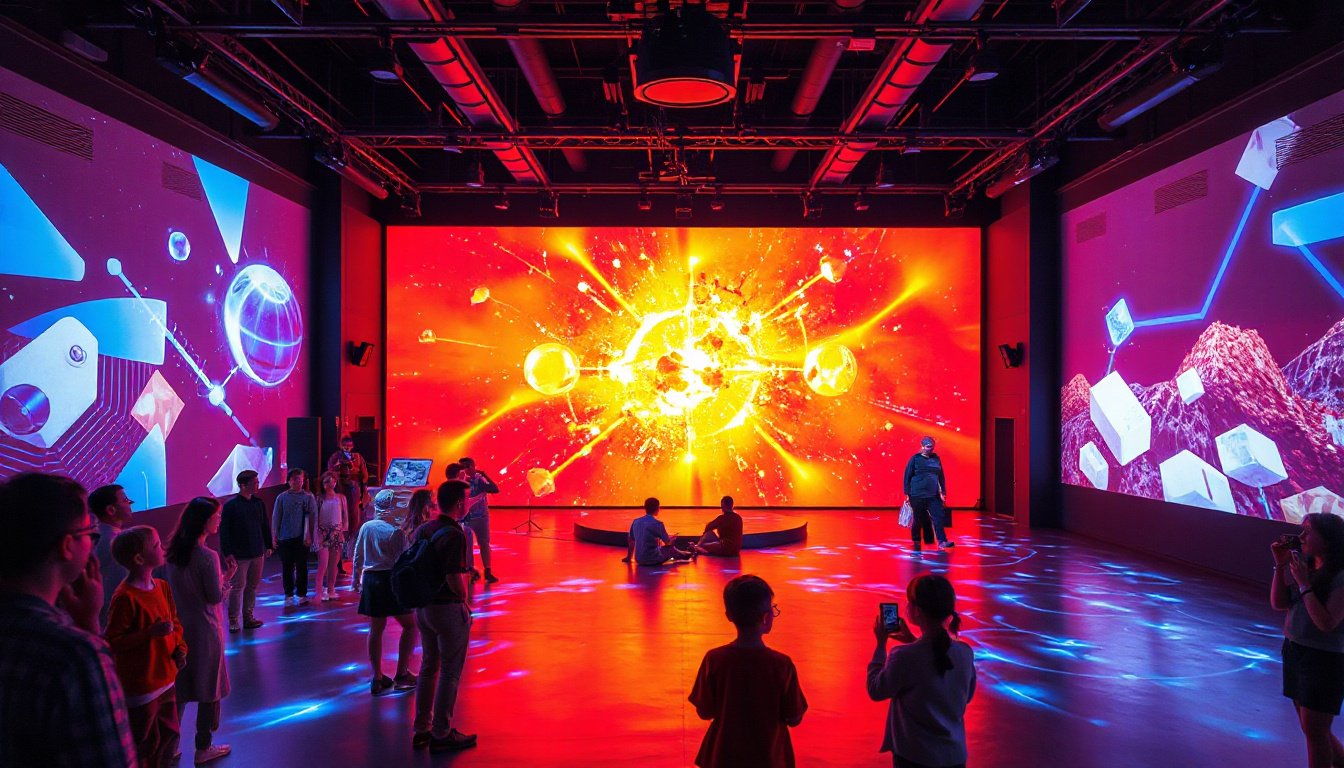
The evolution of 3D projection capabilities is reshaping the way we experience visual content, offering groundbreaking possibilities in fields like entertainment, education, and advertising. By transforming flat, two-dimensional surfaces into dynamic, three-dimensional canvases, 3D projection technologies are creating immersive and interactive experiences that captivate audiences and enhance understanding. This article delves into the mechanisms behind 3D projection, its innovative applications, and its transformative impact across various domains.
Understanding 3D Projection: The Basics
At its core, 3D projection is a design technique used to depict three-dimensional objects on two-dimensional surfaces, such as screens, walls, or buildings. Unlike traditional flat images, 3D projections simulate depth and volume, allowing viewers to perceive spatial relationships more realistically. This is achieved by employing mathematical transformations and graphical rendering techniques that map 3D data onto 2D planes without losing essential visual cues that suggest three-dimensionality.
Two primary types of projection are critical in this process:
-
Parallel Projection: A method where lines of sight from the object to the projection plane remain parallel, preserving dimensions without perspective distortion. This includes variants such as orthographic and isometric projections, frequently used in engineering and technical drawings for precise measurements.
-
Perspective Projection: Mimics how the human eye perceives depth by scaling objects based on their distance from the viewer, producing vanishing points and foreshortening effects. This form is integral for creating realistic images in cinema, gaming, and virtual reality.
3D Projection Mapping: Bringing Surfaces to Life

One of the most revolutionary applications of 3D projection capabilities is 3D projection mapping. This technique involves projecting images, videos, or animations precisely onto irregular physical surfaces, effectively transforming them into dynamic display spaces. By using specialized software and calibration tools, creators build accurate 3D models of the target surfaces, allowing projected content to align perfectly with the object’s contours, textures, and features.
Key stages in 3D projection mapping include:
-
Surface Preparation: Selecting and analyzing the physical object or architecture to optimize projection quality, factoring in texture, color, and ambient lighting.
-
3D Modeling: Creating a digital replica of the surface to design content that fits seamlessly onto the target structure.
-
Content Creation: Developing tailored visuals—ranging from static images to complex animations—that exploit the surface’s unique characteristics for enhanced engagement.
-
Calibration and Projection: Precisely adjusting projector placement, angles, and settings to ensure the content conforms flawlessly to the physical environment.
This process unlocks creative potential across various applications such as artistic installations, advertising campaigns, live events, corporate branding, and educational demonstrations.
Technological Advances Enhancing 3D Projection
Innovations in hardware and software have significantly refined 3D projection capabilities:
-
High-Brightness Laser Projectors: Modern projectors equipped with laser light sources provide much greater brightness and color accuracy, enabling vivid 3D visuals even in well-lit environments.
-
High Frame Rate 3D: Increasing the number of frames per second creates smoother and more realistic motion, reducing viewer fatigue and enhancing immersion.
-
Advanced Image Processing: Incorporation of techniques like active polarization and color separation allow for more effective stereo 3D experiences without excessive ghosting or distortion.
-
Software Integration: Powerful 3D modeling and content creation suites streamline the workflow, making 3D projection mapping more accessible to creators of varying expertise.
Transformative Impacts on Entertainment and Education
Entertainment
3D projection capabilities have revolutionized entertainment by enabling spectacular visual displays that blend digital content with real-world environments. Concerts, theater productions, and theme parks harness projection mapping to craft immersive narratives and breathtaking effects, elevating audience engagement.
Cinema venues and gaming industries incorporate advanced 3D projection techniques to heighten visual realism, bringing characters and worlds to life with stunning depth and clarity.
Education
In educational settings, 3D projection introduces interactive and tangible learning experiences. Complex scientific models, historical reconstructions, and anatomical visuals can be projected in lifelike dimensions, fostering deeper comprehension and retention.
Museums and classrooms implement 3D projection to animate exhibits and facilitate experiential learning, making abstract or challenging concepts more accessible through vivid, spatial representation.
Benefits for Businesses and Creators
Businesses leveraging 3D projection mapping can achieve:
-
Enhanced Brand Visibility: Eye-catching projections on buildings or event spaces draw crowd attention and create memorable impressions.
-
Dynamic Advertising: Storytelling through immersive visuals offers a compelling alternative to traditional media, engaging audiences on emotional and sensory levels.
-
Social Media Amplification: Projection displays often generate shareable content, extending reach via digital platforms.
-
Artistic Expression: Allows brands to showcase identity creatively, forging emotional connections beyond mere product messaging.
For independent creators and artists, 3D projection opens an exciting medium to experiment with form, space, and storytelling, pushing the boundaries of visual communication.
Conclusion
The expanding capabilities of 3D projection are unlocking a future where visuals transcend flat screens to become living, breathing experiences with tangible depth and dimension. As hardware and software continue to advance, the potential uses of this technology in entertainment, education, advertising, and beyond promise to grow exponentially. Embracing 3D projection paves the way for richer storytelling, deeper engagement, and a more immersive interaction between digital content and the physical world.
Whether crafting mesmerizing performances, enlightening learners, or captivating audiences with brand narratives, the power of 3D projection stands as a beacon of innovation, transforming how we perceive and connect with visual media.