





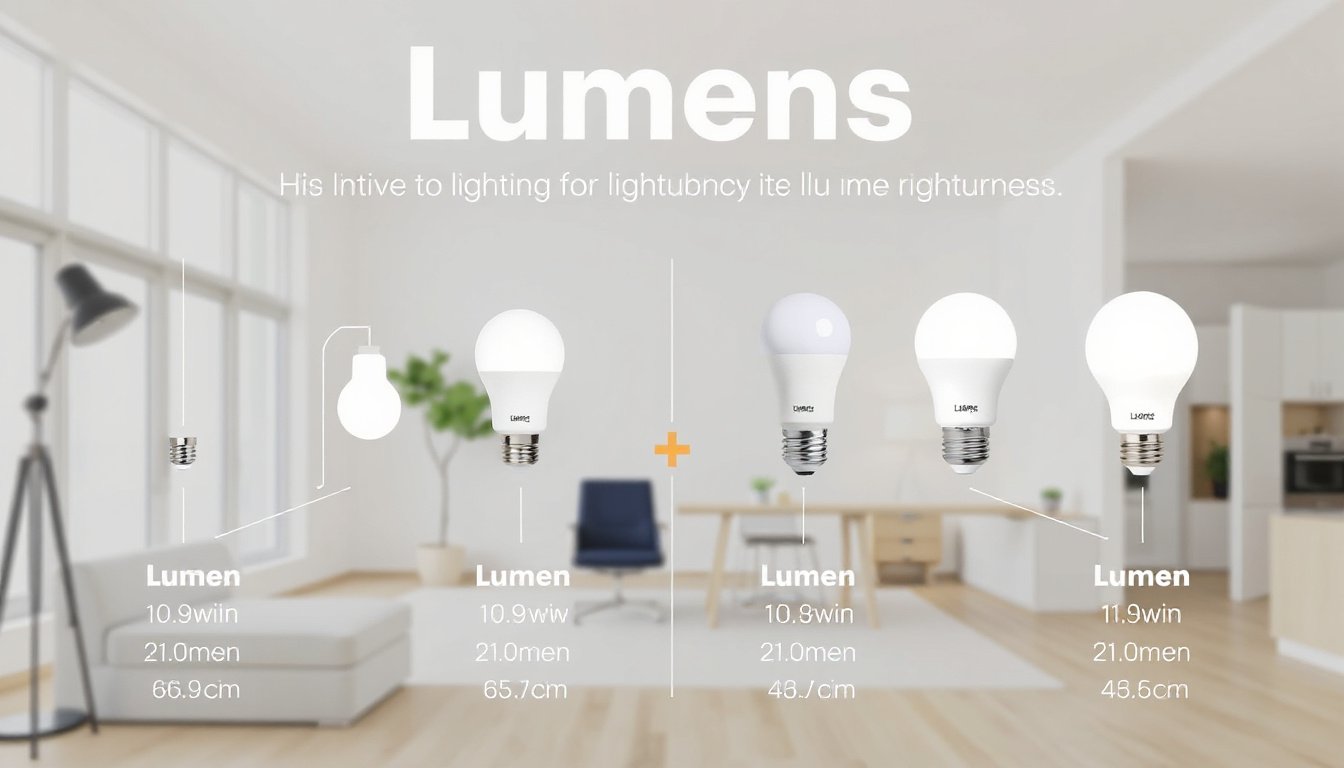
When selecting the right lighting for your home or office, understanding how brightness is measured is essential. Traditionally, watts were used as the main indicator of light bulbs’ brightness, but this has shifted with advances in lighting technology. Today, lumens are the key measurement to determine brightness, providing a more accurate and meaningful guide to light output. This article explores what lumens are, how they relate to watts, and how to use lumens to select the perfect light bulbs for your space.
What Are Lumens?
Lumens quantify the total amount of visible light emitted by a source. Simply put, lumens measure brightness as perceived by the human eye, regardless of the energy consumed. The higher the number of lumens, the brighter the light.
Think of lumens as the "pounds" when buying bananas or "gallons" when buying milk—lumens let you buy the amount of light you want. This means if you want a bright room, you choose bulbs with more lumens; for a cozy, dim setting, select fewer lumens.
For example:
- A bulb emitting 1600 lumens roughly replaces the brightness of a traditional 100-watt incandescent bulb.
- 1100 lumens is comparable to a 75-watt bulb,
- 800 lumens matches a 60-watt bulb,
- and 450 lumens correlates with a 40-watt bulb.
Lumens vs Watts: Why Lumens Matter More Today
While watts measure the energy consumption of a bulb, they no longer directly indicate brightness due to more efficient lighting technologies like LEDs and CFLs:
- Watts are simply a measure of power use.
- Lumens indicate the actual light output.
This shift is critical because an LED bulb may use only 10 watts but emit as much light as a 60-watt incandescent bulb. Since wattage doesn’t reflect brightness consistently across different bulb types, lumens have become the standard for brightness measurement.
When shopping for bulbs, always check lumens for brightness rather than watts for energy consumption to ensure you get the right light level.
How to Use Lumens to Light Your Space
Calculate Total Lumens Needed
To determine how many lumens you need for a room, multiply the square footage by the recommended foot-candle value—a foot-candle being a measure of light intensity on a surface:
Total Lumens = Room Square Footage × Foot-Candle Requirement
For example, a 100-square-foot living room needing 20 foot-candles requires roughly 2,000 lumens.
Here’s a quick guide to typical foot-candle requirements:
| Room Type | Foot-Candles Needed |
|---|---|
| Living Room | 10 – 20 |
| Kitchen | 30 – 80 |
| Dining Room | 30 – 40 |
| Bathroom | 70 – 80 |
| Office Spaces | 50 – 75 |

Adjustments for Ceiling Height and Wall Colors
- Ceiling Height: Rooms with ceilings over 10 feet require more lumens to achieve the same brightness.
- Wall Color: Darker walls absorb light, so increase lumens accordingly—double for medium-dark colors and quadruple for very dark colors.
Account for Personal Preference
If you prefer brighter lighting or use the room for tasks requiring intense light, consider adding 10%-20% more lumens. Pairing this with dimmers enables flexible control over brightness levels.
Interpreting Lumens on Light Bulb Packaging
Modern light bulbs come with a Lighting Facts Label, similar to nutrition labels on food. This label provides:
- Brightness in Lumens – how much light the bulb emits.
- Estimated Energy Cost – an estimate of yearly running cost.
- Lifespan – expected number of operating hours.
- Light Appearance – indicated in correlated color temperature (CCT), measured in Kelvins (K), indicating warm (yellowish) to cool (bluish) light.
Using this label helps you compare bulbs objectively and select one that offers the desired brightness, efficiency, and color.
Summary: Choosing Brightness Wisely with Lumens
- Lumens represent brightness, while watts represent electricity usage.
- More lumens mean brighter light.
- When replacing incandescent bulbs, match lumens, not watts.
- Calculate total lumens needed based on room size and use.
- Consider ceiling height, wall color, and personal taste when planning brightness.
- Use packaging labels to find accurate lumen ratings.
By focusing on lumens, you ensure the lighting you choose provides the appropriate brightness for your activities, whether for cozy evenings at home, vibrant office tasks, or perfectly lit living spaces.
References:
- U.S. Department of Energy, Lumens and the Lighting Facts Label
- Light Up Nashville, Lumens vs Watts: Measuring Brightness of LEDs
- Alcon Lighting, Lumens Calculator and Lighting Design Principles
Choosing lighting based on lumens rather than wattage empowers you to create spaces that are both energy-efficient and perfectly illuminated for your needs. The next time you shop for a bulb, remember: think lumens, not watts.