





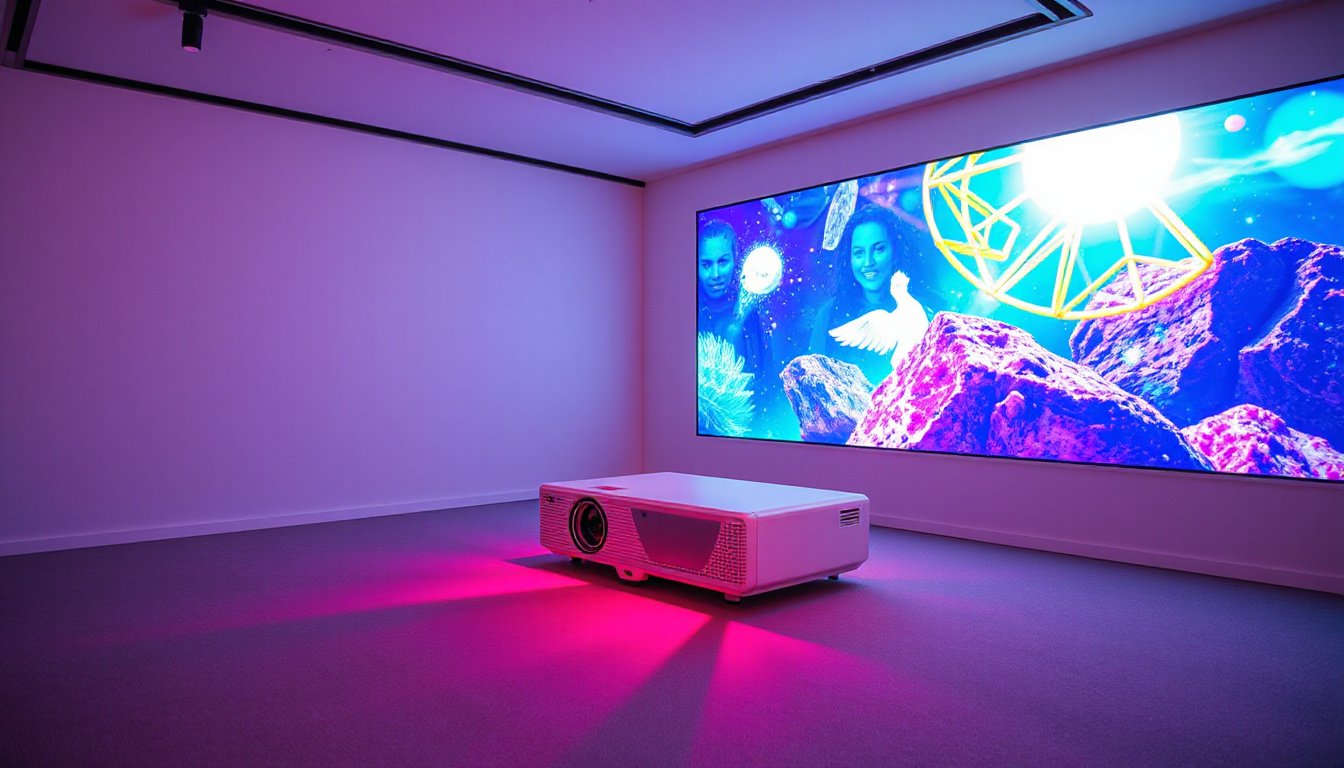
Projection display technology is rapidly evolving, with laser-based light sources leading the charge in delivering brighter, more vibrant, and energy-efficient images. Among the forefront innovations is laser phosphor technology, a sophisticated light source that offers numerous advantages for various projection and lighting applications. This article delves into what laser phosphor technology is, how it works, and the key benefits that make it a compelling choice for modern projection systems.
What is Laser Phosphor Technology?
Laser phosphor technology utilizes a blue laser diode as the primary light source. Unlike traditional projectors that rely on lamps or multi-laser setups emitting red, green, and blue light separately, laser phosphor projectors generate blue laser light that excites a yellow phosphor wheel. When the blue light hits this phosphor material, it emits bright broadband yellow light. This yellow light is then processed through a color wheel that splits it into primary colors to create a full-color image on the projection surface.

This architecture contrasts with RGB laser projectors, which use three distinct lasers (red, green, and blue) to produce colors directly from monochromatic beams. Laser phosphor projectors simplify the system by using a single blue laser and the phosphor emission to supply light for the entire color gamut.
How Laser Phosphor Differs From RGB Laser Projection
Understanding the differences between laser phosphor and RGB laser technologies highlights the specific advantages of laser phosphor systems:
| Feature | Laser Phosphor Projectors | RGB Laser Projectors |
|---|---|---|
| Light Source | Single blue laser diode with yellow phosphor wheel | Separate red, green, and blue laser diodes |
| Color Gamut | Covers standard gamuts like Rec. 709 | Can achieve wider gamuts such as Rec. 2020 |
| Brightness Range | Typically 10,000 to 50,000 lumens | Up to 60,000 lumens and beyond |
| Size & Cooling | More compact, lighter, less intensive cooling required | Larger size due to extensive cooling needs |
| Application Focus | Flexible, versatile for staging, rental, and events | High-end cinema, planetariums, fixed installations |
| Maintenance | Reduced downtime: no lamps or filters to replace | Requires maintenance of multiple laser diodes |
Key Benefits of Laser Phosphor Technology
1. Enhanced Energy Efficiency and Lower Operating Costs
Laser phosphor projectors use high-efficiency blue laser diodes and phosphor wheels, enabling them to consume less power compared to equivalent brightness lamp or RGB laser systems. Because there are no traditional lamps that degrade over time, laser phosphor projectors enjoy longer lifespans (often upwards of 20,000 to 30,000 hours) and significantly reduce maintenance and replacement costs.
2. Compact and Lightweight Design
The simpler architecture of laser phosphor projectors, which avoids multiple laser diodes and more complex cooling systems, allows manufacturers to produce lighter and smaller units. This benefit is crucial for industries requiring mobility and flexibility—such as live event staging, rentals, and temporary installations—facilitating easier transport, setup, and stacking of projectors.
3. Vibrant and Consistent Color Reproduction
Although laser phosphor projectors do not reach the ultra-wide color gamuts attainable by RGB laser units, they comfortably cover standard color spaces like Rec. 709—which is still the prevalent color standard in most professional video content and presentations. This makes laser phosphor an optimal choice for a broad spectrum of applications where color fidelity and vibrancy are essential, without incurring the premium for less common color spectrums.
4. High Brightness Capabilities Suited for Large Venues
With typical brightness output ranging between 10,000 and 50,000 lumens, laser phosphor projectors are well-suited for mid- to large-scale venues, including conference halls, auditoriums, museums, and themed entertainment. Their brightness ensures clear, highly visible images even in environments with ambient light challenges.
5. Reduced Maintenance and Increased Reliability
Since laser phosphor systems eliminate the need for high-intensity discharge lamps and color filters, they achieve much lower maintenance requirements and downtime. The phosphor wheel, despite moving parts, generally has a long lifespan, and laser diodes themselves maintain consistent output over time. This results in more reliable operation and less frequent service interventions—beneficial for businesses and venues aiming to stay operational without interruptions.
6. Robustness and Versatility in Lighting Applications
Beyond projection displays, laser phosphor technology is gaining traction in stage and architectural lighting due to its ability to produce intense, sharp beams with configurable colors and effects. Modern luminaires employing laser phosphor sources offer high contrast ratios, native white points for accurate color temperature, and adaptable zoom capabilities, making them fit for dynamic and demanding lighting environments such as concert tours and outdoor events.
Real-World Applications Driving Laser Phosphor Adoption
- Live Event and Rental Markets: The portability and high brightness of laser phosphor projectors make them preferred choices for touring shows and temporary installations where rapid deployment and consistent performance are critical.
- Education and Corporate Venues: Laser phosphor’s reliability and low maintenance make them ideal for classrooms and meeting rooms where system uptime is essential.
- Museums and Simulations: Ideal brightness, color fidelity, and energy efficiency cater to immersive installations requiring uniform illumination and natural colors.
- Professional Stage Lighting: Hybrid fixtures equipped with laser phosphor sources provide designers with versatile tools capable of producing intricate lighting effects while minimizing system complexity.
Conclusion
Laser phosphor technology represents a pivotal advancement in projection display lighting. By marrying efficient blue laser diodes with phosphor materials, this technology delivers a smart balance of vibrant color output, high brightness, compact design, and reduced operating costs. Its benefits across diverse sectors—from rental and staging to education and large venue applications—position laser phosphor projectors as a future-proof solution for those seeking performance combined with practicality.
As visual content continues to evolve alongside user demands, laser phosphor technology offers a compelling pathway toward brighter, more sustainable, and flexible projection systems that can meet today’s high standards and tomorrow’s innovations.