





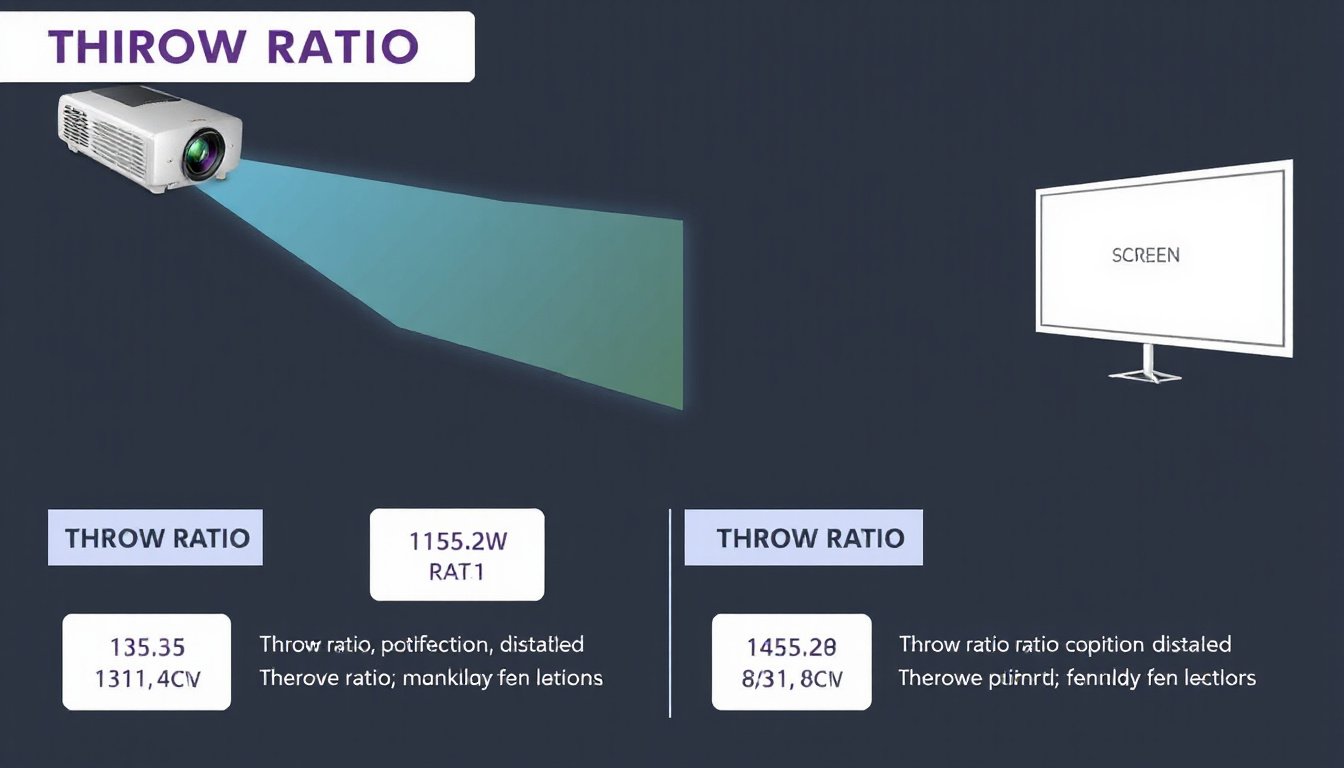
When it comes to setting up a projector, one of the most crucial yet often overlooked specifications is the throw ratio. Whether you’re equipping a home theater, classroom, conference room, or any other space for projection, understanding throw ratio is vital to ensuring the perfect image size and clarity in your available space. This guide will explore what throw ratio means, why it matters, and how to leverage it to optimize your projection setup.
What Is Throw Ratio?
Throw ratio is a numerical representation reflecting the relationship between the distance from the projector lens to the screen and the width of the projected image. Technically, it’s calculated as:
Throw Ratio = Throw Distance ÷ Image Width
For example, a throw ratio of 1.5:1 means that for every 1.5 feet of distance from the projector to the screen, the resulting image will be 1 foot wide. This ratio directly determines how far you need to place the projector to achieve a desired image size.
Why Is Throw Ratio Important?
Throw ratio impacts several core aspects of your projection experience, including:
- Image Size and Placement: Misjudging throw ratio can lead to a projected image that is too small, too large, or awkwardly positioned on the screen or wall.
- Space Compatibility: Your room dimensions and projector location options dictate what throw ratio is feasible. A long throw projector needs more distance, while short throw models work in compact spaces.
- Image Quality: Correct throw ratio ensures you get optimal focus, brightness, and distortion-free pictures.
- Setup Flexibility: Knowing the throw ratio helps you plan mounting and installation, preventing costly adjustments or returns.
Types of Throw Ratios and Their Applications
Projectors broadly fall into three categories based on throw ratio:
-
Ultra Short Throw Projectors (below 0.5:1)
- Can be placed inches from the screen
- Ideal for small rooms, tight spaces, and setups where mounting distance is limited
- Create large images from nearby positions, reducing shadows and glare
-
Short Throw Projectors (approx. 0.38:1 to 1.4:1)
- Suitable for classrooms, small conference rooms, and cozy home theaters
- Require moderate distance for a decent-sized image
- Balance compactness and image size effectively
-
Standard (Long) Throw Projectors (1.5:1 to 2.5:1 or more)
- Best for large rooms, auditoriums, and traditional home theaters
- Need more space between the projector and screen
- Often produce the highest brightness and image quality when room size allows

How to Calculate and Use Throw Ratio for Your Space
To match a projector to your room, you first need accurate measurements:
-
Measure Available Throw Distance
This is the maximum space available between your projector’s proposed mounting spot and the screen. -
Determine Desired Image Width
Based on your preferred screen size (in inches or feet), calculate the width of the projection area, remembering that screen size often refers to diagonal length. -
Calculate the Throw Ratio
Divide the measured throw distance by the image width to find the throw ratio required. -
Compare with Projector Specs
Select a projector whose throw ratio matches or closely fits this calculated value.
Example: If you have a 12-foot space and want a 100-inch diagonal screen (roughly 87 inches wide), then:
- Throw distance = 12 feet
- Image width ≈ 7.25 feet (87 inches ÷ 12)
- Throw ratio = 12 ÷ 7.25 ≈ 1.66:1
You’d look for a projector with a throw ratio close to 1.5 – 1.7. —
Common Mistakes to Avoid
- Choosing a Projector with Mismatched Throw Ratio: A throw ratio too high or too low for your space can cause poor image size, focus issues, or setup problems.
- Ignoring Room Constraints: Not measuring space or considering furniture and screen location can make ideal projector placement impossible.
- Overlooking Screen Size vs. Aspect Ratio: Throw ratio must be understood alongside aspect ratio (image shape) to perfectly fit the image to your screen.
Beyond Throw Ratio: Other Important Ratios in Projection
While throw ratio determines how far and how wide an image will be, other ratios also affect viewing quality:
- Aspect Ratio: The proportion of image width to height (common values: 16:9, 4:3). Matching aspect ratio to content and screen ensures the image fits without black bars or distortion.
- Contrast Ratio: The ratio between the brightest whites and darkest blacks a projector can display, impacting image depth and color richness.
Balancing all these ratios ensures an optimal viewing experience tailored to your space and usage.
Final Thoughts
The throw ratio is a cornerstone specification when planning your projection setup. Understanding it empowers you to:
- Select the right projector type (ultra-short, short, or standard throw) based on your space.
- Achieve the desired image size and quality without frustration.
- Avoid installation hassles and optimize your viewing environment.
By carefully measuring your room, knowing your screen size, and matching these with the appropriate throw ratio, you set a solid foundation for a flawless projection experience—whether for movies, presentations, or gaming.
Remember: Always factor in some adjustment space and consult throw ratio calculators or manufacturer guidelines for precise results. With proper planning, your projector will deliver stunning visuals perfectly tailored to your room!