





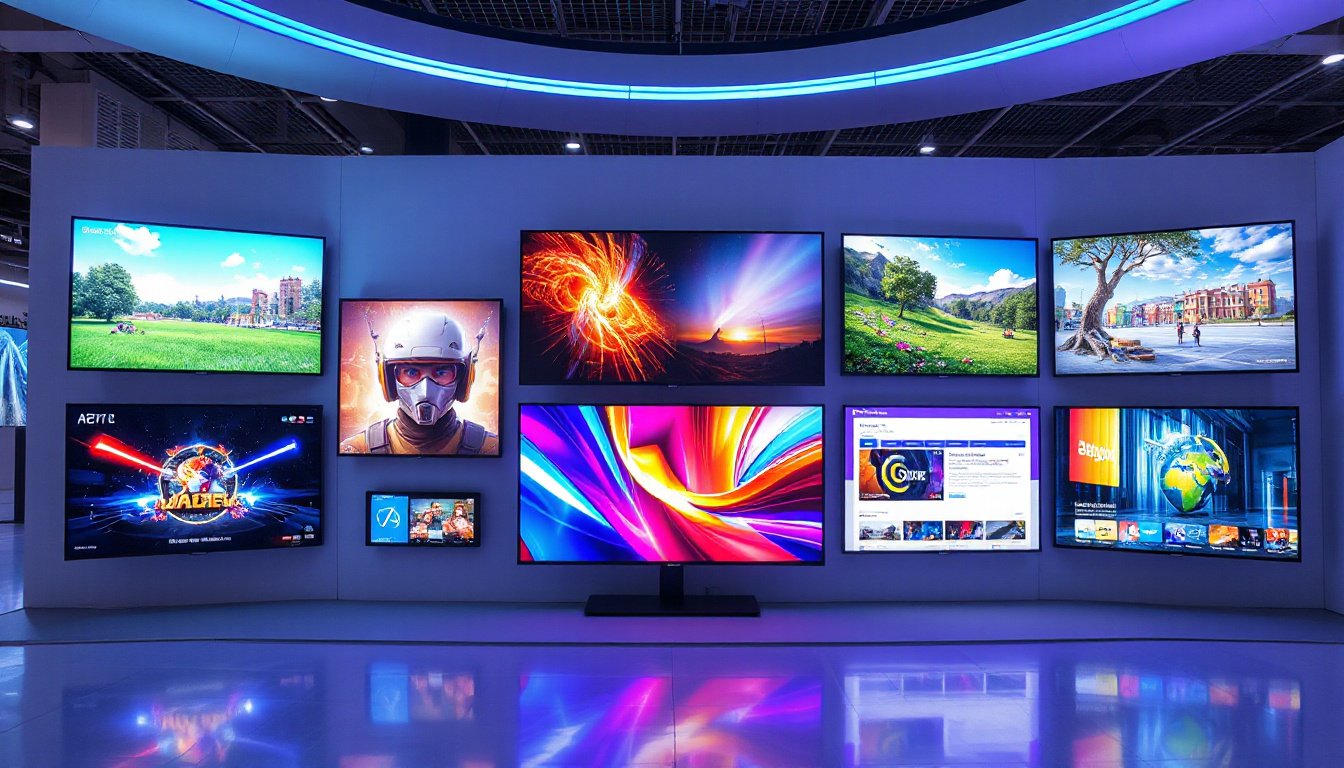
Liquid Crystal Display (LCD) technology has become an integral part of modern digital devices, revolutionizing how we interact with screens every day. From smartphones and laptops to televisions and smartwatches, LCDs offer vibrant visuals, energy efficiency, and compact form factors. This article delves into the fundamentals of LCD technology, its structure, operating principles, types, advantages, drawbacks, and its evolving role in the display landscape.
Understanding LCD Technology
LCD stands for Liquid Crystal Display, a screen technology that uses liquid crystals sandwiched between polarizing filters and glass substrates to manipulate light and create images. Unlike self-emissive displays such as OLED, LCDs do not emit light by themselves. Instead, they rely on an external light source, called the backlight, to illuminate the screen.
How Does an LCD Work?
At its core, an LCD consists of millions of tiny individual cells known as pixels. Each pixel contains liquid crystal molecules that can twist and align in response to electric voltage. This alignment controls the polarization of light passing through the pixel.
- Without voltage, the liquid crystals are arranged so that polarized light can pass straight through.
- With voltage applied, the crystal molecules reorient, twisting the polarization and changing the amount of light allowed to pass through a second polarizing filter.
By selectively applying voltage across pixels, the LCD acts effectively as a light shutter, blocking and allowing segments of the backlight to create images with varying intensity levels.
To produce color, each pixel is further subdivided into sub-pixels with red, green, and blue (RGB) filters. By varying the light passing through these sub-pixels, a full spectrum of colors is rendered onscreen.
Structural Composition of LCDs

An LCD panel is composed of multiple precisely aligned layers:
- Polarizing Filter (Vertical) – Polarizes incoming light in one fixed direction.
- Glass Substrate with Transparent Electrodes (Indium Tin Oxide – ITO) – Defines pixel shape and controls the electrical signal.
- Liquid Crystal Layer – Contains liquid crystal molecules whose orientation affects light polarization.
- Second Glass Substrate with Electrodes – Completes the electrical circuit controlling the liquid crystals.
- Second Polarizing Filter (Horizontal) – Oriented perpendicular to the first filter to block or allow light passage.
- Backlight or Reflective Layer – Provides illumination from behind (in transmissive displays) or reflects ambient light (in reflective displays).
Two main structural types exist:
- Transmissive LCDs: Use a backlight to illuminate pixels, suitable for color displays on devices such as TVs and monitors.
- Reflective LCDs: Rely on ambient light reflected back through the LCD, common in devices like calculators and some monochrome screens, offering lower power consumption.
Types of LCD Displays
LCD technology varies based on pixel control and crystal alignment methods, which affect display quality and responsiveness.
1. Passive Matrix LCD
This early LCD type uses a simple grid of electrodes where each pixel is addressed by the intersection of a horizontal and a vertical line. Due to slower response times (~300ms) and lower contrast, images may appear blurred or suffer from ghosting effects. Variants like Dual Scan Twisted Nematic (DSTN) tried to improve performance but still are largely superseded.
2. Active Matrix LCD (Thin Film Transistor – TFT)
Active matrix LCDs incorporate a thin-film transistor for each pixel, allowing independent control, faster response times, and higher image quality without ghosting. This technology dominates modern LCDs, powering most smartphones, laptops, and flat-panel TVs.
3. Different Panel Technologies Within LCDs
- TN (Twisted Nematic): Known for fast response and low cost, but has limited color accuracy and narrow viewing angles.
- IPS (In-Plane Switching): Offers superior color fidelity and wide viewing angles, preferred for professional work requiring accurate color reproduction.
- VA (Vertical Alignment): Offers better contrast ratios and color reproduction than TN but with slightly slower response times.
- AFFS (Advanced Fringe Field Switching): An evolution similar to IPS with improvements in brightness and color accuracy.
Advantages of LCD Technology
- High Resolution and Image Clarity: LCDs provide sharp, bright images with high contrast ratios suitable for a wide variety of applications.
- Thin and Lightweight: Their flat-panel design allows slim, lightweight devices.
- Power Efficiency: Uses less energy than older CRT displays. Reflective LCD variants consume very little power.
- Cost-Effectiveness: Mass production has driven down costs, making LCDs ubiquitous in consumer electronics.
- Environmental and Health Friendly: LCDs don’t emit harmful radiation and have lower heat emission.
Drawbacks and Limitations
- Backlight Dependency: Requires constant illumination source which can affect battery life and limit contrast in bright environments.
- Viewing Angle and Color Shift: Some panel types (especially TN) have narrow viewing angles causing color distortions when viewed off-center.
- Thickness: The need for multiple layers (polarizers, glass, backlight) can make screens thicker than emerging alternatives.
- Response Time: Though improved, LCD response times still lag behind some OLED counterparts, potentially causing motion blur in fast-moving images.
- Outdoor Visibility: Sunlight can wash out colors and reduce visibility without specialized enhancements.
Applications of LCD Technology
Because of their versatility, LCD screens are found in an expansive range of devices:
- Consumer Electronics: Smartphones, tablets, laptops, desktop monitors, and TVs.
- Wearables: Smartwatches and fitness trackers often use small LCDs.
- Automotive Displays: Dashboards and infotainment systems.
- Industrial Instruments: Measurement devices, medical equipment, and instrumentation.
- Gaming Devices: Portable consoles and monitors optimized with high-refresh-rate LCDs.
The Future of LCD Displays
While new technologies like OLED and MicroLED challenge LCD’s dominance, LCD remains a cost-effective and reliable choice, continuously evolving with innovations such as mini-LED backlighting and quantum dot enhancement. These developments boost contrast ratios, brightness, and color performance, extending the lifespan and relevance of LCD technology in the coming years.
Conclusion
LCD technology has profoundly shaped the display industry by offering a blend of efficiency, clarity, and affordability. Understanding how LCDs operate helps appreciate their wide adoption and the ongoing innovations that continue to unlock their full potential. As the future unfolds, LCDs will remain vital in many display applications, bridging performance and cost in an increasingly screen-centric world.