





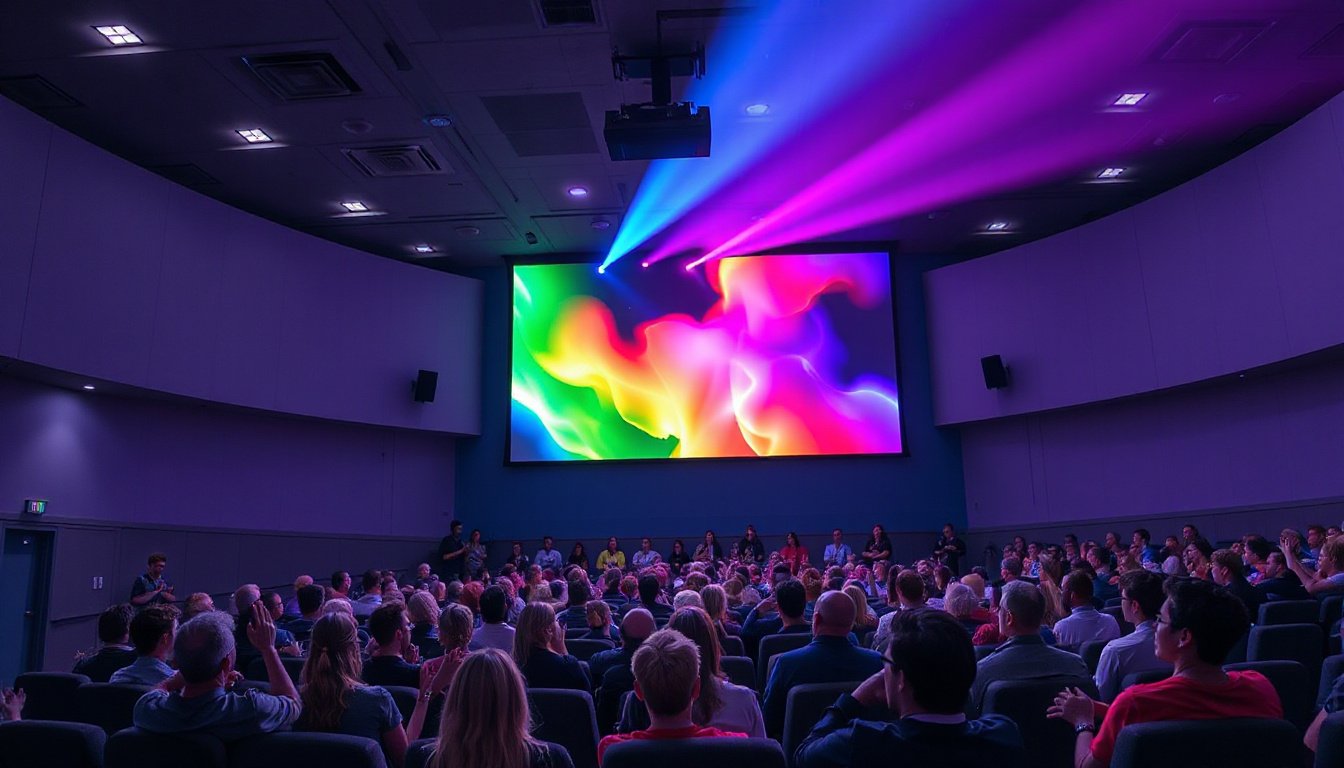
In the rapidly evolving domain of visual display technology, 3LCD technology has emerged as a groundbreaking innovation, transforming the way images are projected across education, business, and home entertainment sectors. By fundamentally enhancing color accuracy, brightness, and image fidelity, 3LCD technology is setting new standards for projector performance and user experience. This article delves into the mechanisms behind 3LCD, its advantages over conventional projection methods, and the profound impact it has had on modern projection systems.
Understanding 3LCD Technology
At its core, 3LCD technology is a sophisticated projection method that employs three distinct liquid crystal display (LCD) panels—one each dedicated to the primary colors of light: red, green, and blue. Unlike single-chip systems that sequentially project colors and rely on rapid switching, 3LCD simultaneously processes all three primary colors through separate panels. This simultaneous processing ensures that the final image retains vibrant, natural, and consistent color reproduction without the distortions often seen in other projector types.
How Does 3LCD Work?

The process begins with a white light source emitting a powerful beam that passes through a series of precision-engineered dichroic mirrors. These mirrors are coated to reflect specific wavelengths of light, effectively splitting the white light into its fundamental primary colors. Each color stream is then directed onto its dedicated high-temperature polysilicon TFT liquid crystal panel (HTPS LCD), where an electrical signal modulates the light to form a precise image in that color.
These three color images—red, green, and blue—are recombined with a high-precision dichroic prism to create a single, cohesive, and vivid full-color image. This image is then projected through the lens onto a screen, delivering bright and richly detailed visuals.
Advantages of 3LCD Technology Over Other Projection Systems
1. Superior Color Brightness and Accuracy
In traditional projectors, brightness is often measured by white light output alone, while color brightness can lag behind, leading to washed-out or dull images. 3LCD projectors stand out by delivering high color light output that matches or closely approaches their white brightness levels. This means that the colors projected are not only bright but true to life and vividly saturated.
Moreover, 3LCD projectors typically offer a color gamut up to three times wider than that of single-chip digital light processing (DLP) projectors, enabling them to reproduce a more expansive range of colors with greater precision. This enriched color fidelity is critical for applications demanding accurate color representation, such as education, art presentations, and high-end home theaters.
2. Elimination of Rainbow Effect
Many single-chip DLP projectors create images by sequentially flashing red, green, and blue light in quick succession—a method that can induce a phenomenon known as the "rainbow effect." This effect manifests as distracting flashes or color breakup, particularly noticeable during fast-moving scenes or for sensitive viewers.
3LCD technology avoids this entirely by projecting all three primary colors simultaneously, resulting in stable images free of rainbow artifacts. This leads to a more pleasant and fatigue-free viewing experience, especially for extended use or immersive content.
3. Enhanced Image Detail and Natural Gradation
The high-performance HTPS LCD panels used in 3LCD projectors provide finely controlled light transmission. This allows for detailed rendering of dark scenes and subtle gradations, preserving image nuances that might be lost or muddled in other projector types. The ability to faithfully reproduce complex imagery makes 3LCD technology ideal for environments requiring precision and clarity, such as classrooms, conference rooms, and galleries.
4. Reliable and Consistent Performance
3LCD is a mature, reliable technology utilized by numerous leading projector manufacturers under license from Seiko Epson Corporation. Its robust design and optical precision ensure consistent performance with reduced maintenance needs. Furthermore, Epson’s advancements in areas such as laser light sources integrate seamlessly with 3LCD systems, offering rapid startup, long life (up to 20,000 maintenance-free hours), and energy efficiency.
Transformative Applications of 3LCD Technology
The superior qualities of 3LCD technology have driven its widespread adoption in various domains:
- Education: Classrooms benefit from bright, legible, and color-accurate images that ensure students can clearly see detailed content regardless of ambient lighting conditions.
- Business: Meetings and presentations become more impactful with vivid graphics and text, facilitating better communication and engagement.
- Home Theater: 3LCD projectors deliver cinematic-quality visuals with dynamic colors and smooth motion, creating immersive entertainment experiences.
- Large Venues and Events: High brightness and true-to-life colors make 3LCD projectors suitable for auditoriums, digital signage, and events requiring professional-grade visuals.
Conclusion
3LCD technology has undeniably revolutionized the landscape of modern projection systems by addressing traditional limitations in brightness, color accuracy, and image stability. Its innovative use of three dedicated LCD panels to simultaneously reproduce primary colors results in images that are brighter, more vibrant, and free of distracting artifacts. As this technology continues to evolve alongside complementary advancements in light sources and optics, it remains at the forefront of delivering superior visual clarity that meets the diverse needs of contemporary audiences worldwide.