





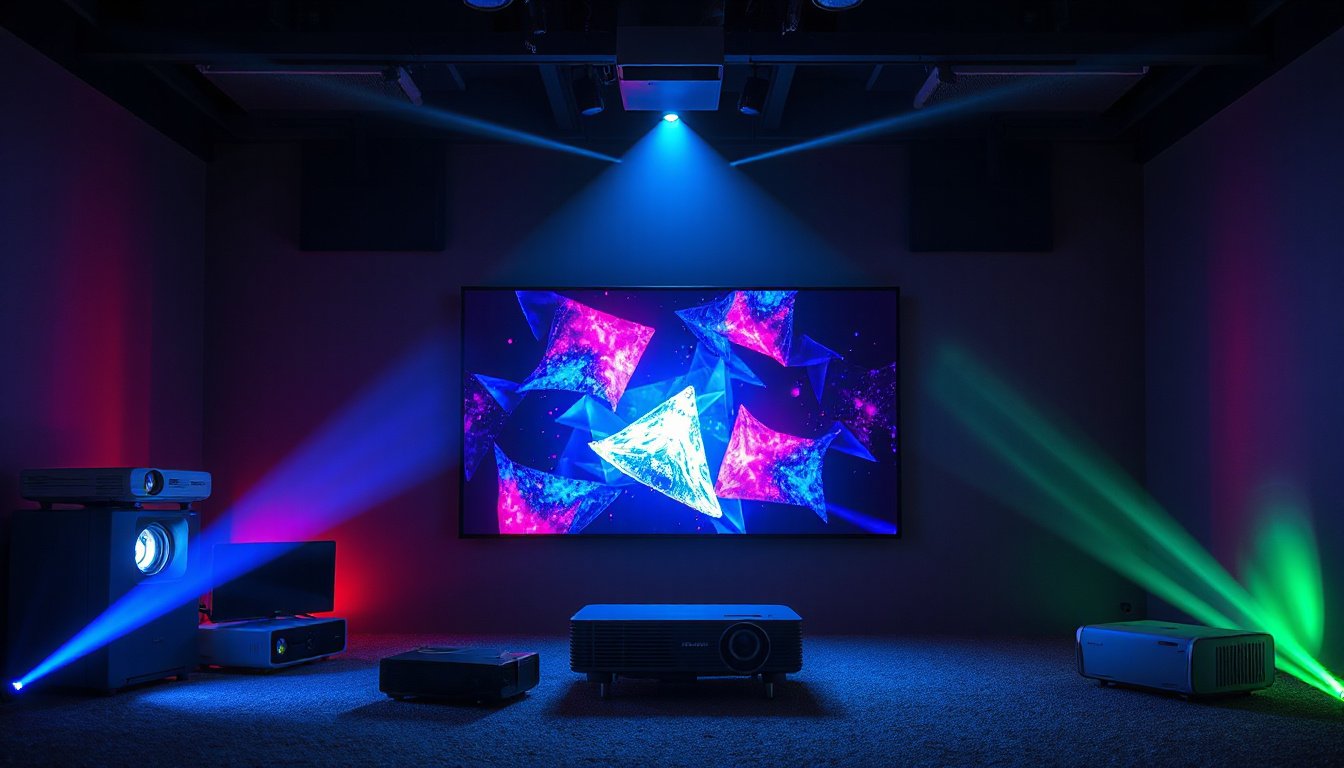
When it comes to projectors, contrast ratio and color accuracy play pivotal roles in delivering an immersive viewing experience. Whether you’re setting up a home cinema, a professional screening room, or a business presentation, understanding projector contrast enhancement technologies can help you select equipment that produces vibrant, sharp, and lifelike images. This article dives into the top contrast enhancement technologies available today and the trade-offs involved, helping you illuminate your screen with stunning visuals.

What is Projector Contrast and Why Does It Matter?
Contrast in projection refers to the ratio between the brightest white and the deepest black a projector can produce. This ratio, known as the contrast ratio, directly influences the detail and depth perceived in an image. A higher contrast ratio means that viewers can see more subtle gradations in light and shadow, enhancing the realism and emotional impact of the content displayed.
A high contrast ratio is especially critical for cinematic content featuring dramatic lighting—such as dark scenes or delicate fades—where accurate shadow detail and highlight separation are essential to storytelling.
Types of Contrast Enhancement Technologies
1. Dynamic Contrast
Dynamic contrast refers to the projector’s ability to adjust brightness dynamically in real time based on image content. While some projectors modulate lamp or laser output or use iris mechanisms to dim the light source in dark scenes, truly effective dynamic contrast enhances perceived black levels without sacrificing overall brightness.
Dynamic contrast technologies are attractive because they can simulate high contrast in scenes with varying lighting conditions, but they may introduce artifacts like "pumping" effects if not finely tuned.
2. High-Contrast and Ultra-High Contrast Lenses
Lenses play a surprisingly important role in contrast enhancement. High-contrast lenses are engineered to minimize internal reflections and light scatter within the projector’s optical path. By sharply reducing stray light, these lenses boost the contrast ratio and image clarity.
Ultra-high contrast lenses take this further, particularly when paired with laser projectors that produce collimated (highly directional) light, which is easier to control. However, these lenses may reduce overall brightness—sometimes by as much as 27%—as some light is deliberately blocked to improve black levels and contrast fidelity.
Premium lenses with larger diameters also enhance contrast by maximizing the proportion of the image displayed through the lens’s sharpest region (its center), rather than through edge areas where image quality tends to degrade.
3. Light Source Technologies
The choice of illumination source significantly impacts contrast and color reproduction:
-
Xenon Lamps: This traditional light source mimics sunlight closely, producing natural colors within the DCI-P3 color gamut. Xenon lamps typically offer around a 2,000:1 contrast ratio, considered the baseline standard in digital cinema. They are reliable but require periodic lamp replacements.
-
RB Laser Phosphor: This hybrid technology uses red and blue lasers combined with a phosphor wheel to generate green, achieving around a 2,000:1 to 3,000:1 contrast ratio. While efficient and producing good color, phosphor wear over time can cause color degradation.
-
RGB Pure Laser: The pinnacle of current cinema illumination, RGB pure laser projectors employ separate red, green, and blue lasers, capable of producing over 95% of the Rec. 2020 color space with contrast ratios reaching 6,000:1 when paired with ultra-high contrast lenses. This results in the deepest blacks and widest color gamut available, though it comes at higher costs and some brightness trade-offs due to contrast-boosting optics.
4. BenQ HDR-PRO Contrast Enhancer
BenQ, a leading projector manufacturer, incorporates proprietary contrast enhancer technology in some of its HDR-PRO projectors. This technology dynamically analyzes the image’s content and enhances contrast by adjusting brightness and gamma curves. The result is heightened detail in dark scenes, richer shadows, and more vivid color separation without the need for hardware modifications like special lenses.
Trade-Offs and Considerations
Optimizing contrast enhancement often involves balancing brightness and image quality:
-
Brightness vs. Contrast: Ultra-high contrast lenses and advanced laser sources boost blacks and contrast but can reduce perceived brightness. Projectors must have sufficiently high native brightness to compensate.
-
Cost and Maintenance: Xenon lamps require replacement and have a limited lifespan, while lasers have higher upfront costs but longer operational life with consistent performance.
-
Color Accuracy: Contrast technologies should preserve or enhance color accuracy. RGB pure laser projectors excel here by recreating a wider gamut of colors compared to phosphor or lamp technologies.
-
Dynamic Contrast Limitations: While dynamic contrast is a useful tool, it can sometimes introduce visual distractions or lag in brightness adjustment, especially for fast-moving scenes.
Measuring Contrast: Sequential vs. ANSI
Two main methods gauge projector contrast:
-
Sequential Contrast: Measures the brightness of a full white screen versus a full black screen displayed one after the other. This is common but can be influenced by ambient light and projector settings.
-
ANSI Contrast: Uses a checkerboard pattern of white and black squares displayed simultaneously, providing a practical measure of contrast under real viewing conditions.
Both are important, but ANSI contrast often better represents real-world performance.
Final Thoughts
Projector contrast enhancement technologies have evolved significantly, blending optical innovations, powerful light sources, and intelligent processing to deliver immersive visuals with deep blacks and vibrant colors. Choosing the right technology depends on your environment, budget, and viewing priorities.
- For cinema enthusiasts seeking the ultimate color and contrast, RGB pure laser projectors paired with ultra-high contrast lenses offer unmatched image quality.
- For versatile use and cost-effectiveness, Xenon lamp projectors with high-contrast lenses remain dependable.
- Hybrid options like RB laser phosphor projectors provide a balance between performance and maintenance needs.
- Dynamic contrast technologies can supplement hardware by enhancing perceived detail, especially in consumer-grade projectors.
Understanding how these technologies work empowers you to select a projector setup that truly illuminates your screen, delivering the stunning visuals you desire.
References
- BenQ HDR-PRO Contrast Enhancer technology overview.
- Christie Digital Systems: Illumination Types and Contrast Trade-offs.
- RTINGS.com: Challenges in Testing Dynamic Contrast on Projectors.