





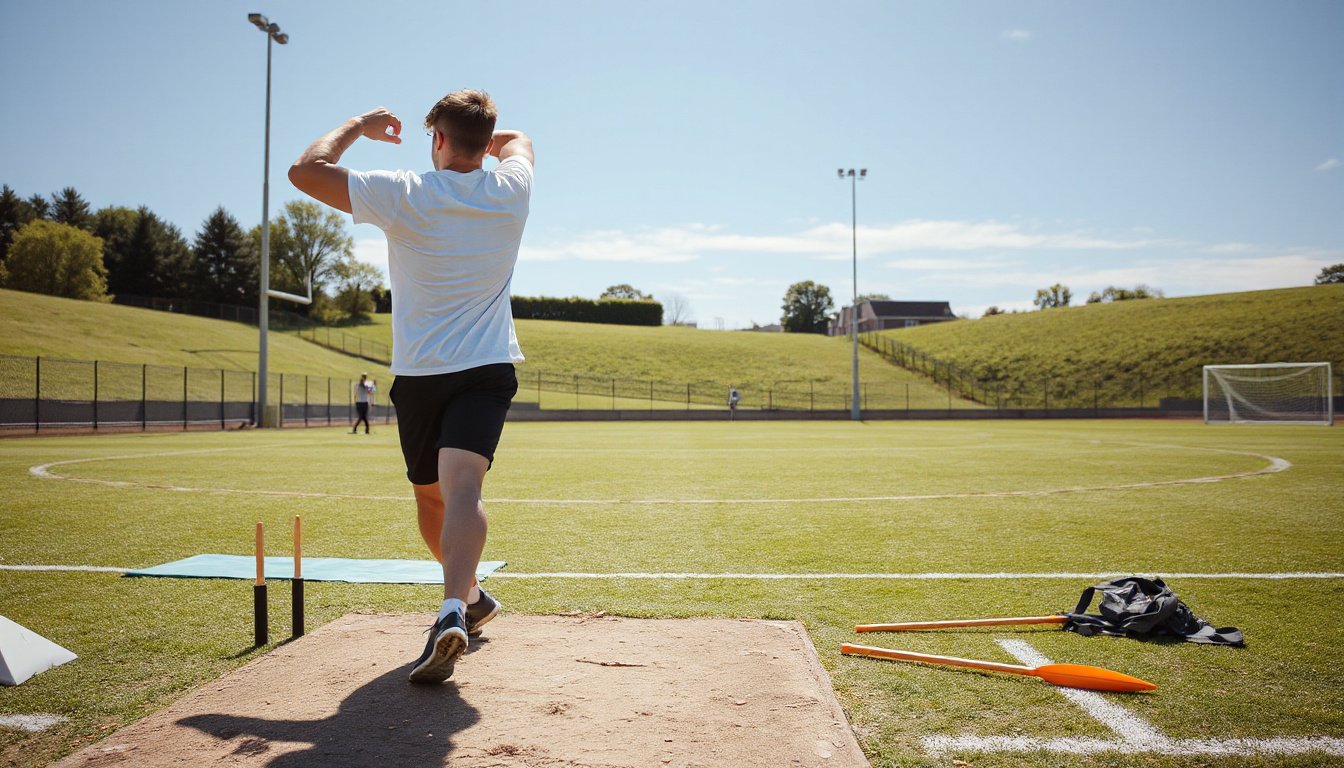
Throw distance is a fundamental concept across various sports and activities, representing the distance an object — whether a ball, disc, javelin, or other item — travels when thrown. For aspiring athletes aiming to improve their throwing skills, mastering throw distance involves understanding key principles, refining technique, and employing strategic training. This article delves into the essentials of throw distance, offers practical tips for improvement, and highlights techniques to maximize performance.
Understanding Throw Distance
Throw distance is the measure of how far an object travels from the point it is released to the point it lands. It depends on several factors:
- Throwing technique: The form and mechanics used during the throw.
- Release angle: The optimal angle typically hovers around 30-45 degrees for maximum distance.
- Release velocity: The speed at which the object leaves the hand.
- Environmental influences: Wind, weather, and surface conditions.
- Type of object and grip: Different implements (e.g., javelin vs. shot put) require different handling and technique.
Athletes must hone each of these elements to optimize performance and increase throw distance.

Key Techniques to Maximize Throw Distance
1. Optimize Your Stance and Footwork
- Begin with a stable, balanced stance, feet shoulder-width apart.
- Use your legs effectively to generate force; many throws involve a "run-up" or steps to build momentum.
- Transfer body weight smoothly from back foot to front foot upon release.
2. Master Proper Grip and Release
- Secure a firm but comfortable grip on the object.
- The release point significantly affects distance; release too early or late can drastically shorten your throw.
- For most throwing events, a quick wrist snap can add additional velocity.
3. Perfect Your Arm Movement
- Engage your shoulder, elbow, and wrist joints fluidly.
- Avoid mechanical stiffness to increase speed and efficiency.
- Use your entire body to create a kinetic chain—from legs through torso to the throwing arm.
4. Determine Optimal Throwing Angle
- The theoretical optimal release angle for maximum horizontal distance, ignoring air resistance, is 45 degrees.
- In practice, this might be closer to 30-40 degrees depending on the object and individual technique because of height and aerodynamic factors.
5. Incorporate Strength and Conditioning
- Focus on building power in the legs, core, and upper body.
- Explosive exercises like medicine ball throws and plyometrics can enhance muscular power.
- Proper flexibility reduces injury risk and improves range of motion.
Training Tips for Improving Throw Distance
- Drills targeting each phase: Break down the throw into parts such as footwork, arm swing, and release to isolate and improve specific skills.
- Video analysis: Recording throws can help identify technical flaws.
- Consistent practice: Regular sessions build muscle memory and refine coordination.
- Cross-training: Engage in complementary activities (e.g., sprinting, jumping) to boost overall athleticism.
Throw Distance Calculations: A Technical Perspective
While throw distance in sports is a physical measurement, understanding related calculations from other fields, like projector throw distances, can enrich comprehension of proportional relationships and ratios.
In projectors, throw distance is the space between the projector lens and the screen and relates proportionally to the image size—expressed as the throw ratio, which equals the throw distance divided by the image width. Similarly, in throwing sports, the release velocity and angle determine how far the object travels, analogous to how projector optics affect image dimensions.
Environmental and Equipment Considerations
- Wind and weather: Tailwinds can increase throw distance, while headwinds may reduce it.
- Equipment quality: Custom or sport-specific gear often improves handling and control.
- Surface: Proper footwear and throwing surface impact energy transfer and safety.
Conclusion
Mastering throw distance is a multifaceted endeavour that combines mechanics, physical conditioning, technique, and environmental understanding. Whether you’re training in javelin, disc golf, or shot put, focusing on the principles highlighted — optimizing stance, release angle, and velocity — will help you extend your reach. Through consistent practice and refinement of your skills, you can achieve greater distances and elevate your athletic performance.
By embracing these tips and techniques, aspiring athletes can confidently work towards mastery of throw distance, setting the foundation for competitive success and personal achievement.