





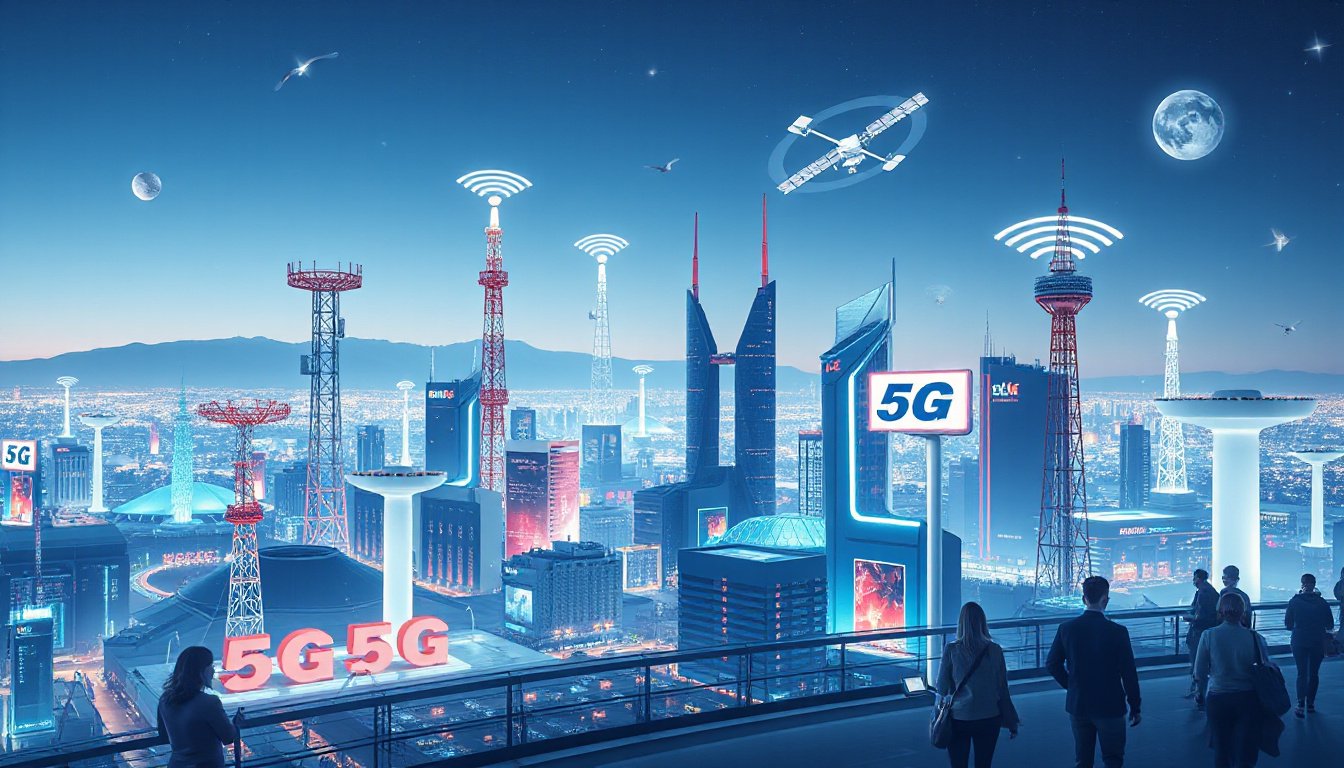
Wireless connectivity has become the backbone of modern digital life, powering everything from smart home devices and wearable technology to large-scale industrial Internet of Things (IoT) deployments. As digital environments grow increasingly complex and interconnected, understanding the range of wireless connectivity options available—and their unique strengths—becomes crucial for both consumers and businesses aiming to optimize performance, reliability, and security.
This article explores the leading wireless connectivity technologies shaping today’s digital landscape and looks ahead to how these options will evolve to enhance our connected experiences.
Understanding Wireless Connectivity
At its core, wireless connectivity refers to the transmission of data without physical cables, enabling devices to communicate over specific frequency bands using radio waves and other signals. Each wireless technology balances trade-offs among factors such as range, bandwidth, power consumption, security, and cost, making them suited for different applications and environments.
Major Wireless Connectivity Options
1. Cellular Networks (3G, 4G, 5G, LTE-M, NB-IoT)
Cellular connectivity remains one of the most versatile and widely adopted forms of wireless communication. Modern cellular standards span from traditional broadband networks to specialized IoT-centric protocols such as LTE-M and Narrowband IoT (NB-IoT).
- Use Cases: Mobile devices, industrial automation, real-time healthcare data transmission, public safety surveillance.
- Strengths: Wide coverage, high bandwidth, ultra-low latency (especially with 5G), and support for mobile connectivity.
- Considerations: May require SIM management and typically consumes more power than low-energy wireless alternatives.
The arrival of 5G technology particularly expands opportunities for real-time and mission-critical applications by offering ultra-low latency and massive device connection capabilities.
2. Wi-Fi (WLAN)
Wi-Fi is an extremely popular wireless local area network (WLAN) technology used predominantly in homes, offices, and public spaces.
- Use Cases: Internet access for laptops, smartphones, IoT devices, smart appliances.
- Strengths: High throughput, well-established standards (now advancing with Wi-Fi 6 and the upcoming Wi-Fi 7), widespread availability.
- Considerations: Limited range compared to cellular; higher power consumption; security risks, particularly when mixed with enterprise IT networks; difficulties scaling in large IoT deployments.
Wi-Fi networks can be deployed in various configurations, such as infrastructure mode using access points or ad hoc peer-to-peer modes. Enterprise environments often segment IoT devices into separate Wi-Fi networks to mitigate security concerns.
3. Bluetooth and Bluetooth Low Energy (BLE)
Bluetooth technologies specialize in short-range wireless personal area networks (WPANs), connecting devices within roughly 10 meters.
- Use Cases: Wearables (fitness trackers, smartwatches), wireless peripherals (headphones, keyboards), smart home sensors.
- Strengths: Low power consumption (especially BLE), ease of pairing and use, ideal for small-scale consumer IoT solutions.
- Considerations: Limited range and bandwidth unsuitable for large data transfers or wide-area coverage.
As Bluetooth standards evolve, they continue to enhance throughput, security, and coexistence with other wireless technologies.
4. Low Power Wide Area Networks (LPWAN)
LPWAN technologies like LTE-M, NB-IoT, and proprietary variants provide low-bandwidth, long-range wireless communication optimized for devices with limited power sources.
- Use Cases: Asset tracking, environmental monitoring, smart metering.
- Strengths: Long battery life, wide coverage areas, low-cost devices.
- Considerations: Low data rates and latency; not suitable for real-time data needs.
Standardization efforts continue to improve LPWAN security and interoperability, expanding their adoption for large-scale IoT deployments.
5. LoRaWAN
LoRaWAN is a popular long-range, low-power wireless networking protocol tailored for IoT deployments requiring wide coverage and infrequent data transfers.
- Use Cases: Smart agriculture (irrigation control), leak detection, logistics and transportation management, asset tracking.
- Strengths: Large coverage radius, minimal power consumption, operates via gateways that connect to cellular networks for Internet access.
- Considerations: Requires gateway infrastructure; lower data throughput; indirect Internet connectivity.
This protocol appeals to use cases that prioritize device longevity and geographic range over data volume.
6. Radio Frequency Identification (RFID)
RFID uses radio frequency signals to wirelessly identify tagged objects without needing direct network connectivity.
- Use Cases: Supply chain management, warehouse inventory, patient tracking in healthcare, access control.
- Strengths: Efficient asset tracking, real-time monitoring, low device cost.
- Considerations: Requires gateway devices to connect RFID systems to cloud platforms.
RFID systems enhance logistical efficiency and improve operational accuracy across various industries.

Types of Wireless Networks by Coverage
Wireless connectivity technologies are often classified by the network coverage they provide:
- Wireless Personal Area Network (WPAN): Very short range (up to 10 meters), e.g., Bluetooth.
- Wireless Local Area Network (WLAN): Limited to buildings or campuses, e.g., Wi-Fi.
- Wireless Metropolitan Area Network (WMAN): City-wide coverage, e.g., WiMAX.
- Wireless Wide Area Network (WWAN): Large-scale, cellular networks like 4G and 5G enabling nationwide or global coverage.
Selecting the right wireless network depends on device location, required coverage, data needs, and security requirements.
Emerging Trends and the Road Ahead
The future promises continued innovation in wireless connectivity:
- Wi-Fi 7: Expected to offer increased capacity, faster data rates, and lower latency for dense device environments.
- 5G Evolution: Further enhancement in reliability and speed will bolster complex IoT applications and smart city infrastructure.
- Convergence of Technologies: Hybrid solutions integrating cellular, LPWAN, and Wi-Fi technologies to best serve diverse use cases.
- Security Advances: Growing emphasis on network segmentation, encryption, and endpoint security to protect the expanding wireless ecosystem.
- Cloud-Managed Wi-Fi: Simplifies network control and monitoring, enabling dynamic response to changing connectivity demands.
Conclusion
Wireless connectivity options are numerous and diverse, each designed to address specific challenges related to device capabilities, power constraints, geographic scope, and data requirements. Understanding their unique characteristics allows consumers, businesses, and developers to architect solutions that maximize performance, efficiency, and security.
With rapid advances in cellular technology, Wi-Fi protocols, and low-power wide-area networks, the future of wireless connectivity promises a richer digital experience—seamlessly connecting people and devices anytime, anywhere.
References: Synthesis based on the latest insights from IoT technology analyses, enterprise networking overviews, and Cisco’s Wi-Fi technology definitions as of mid-2024.