





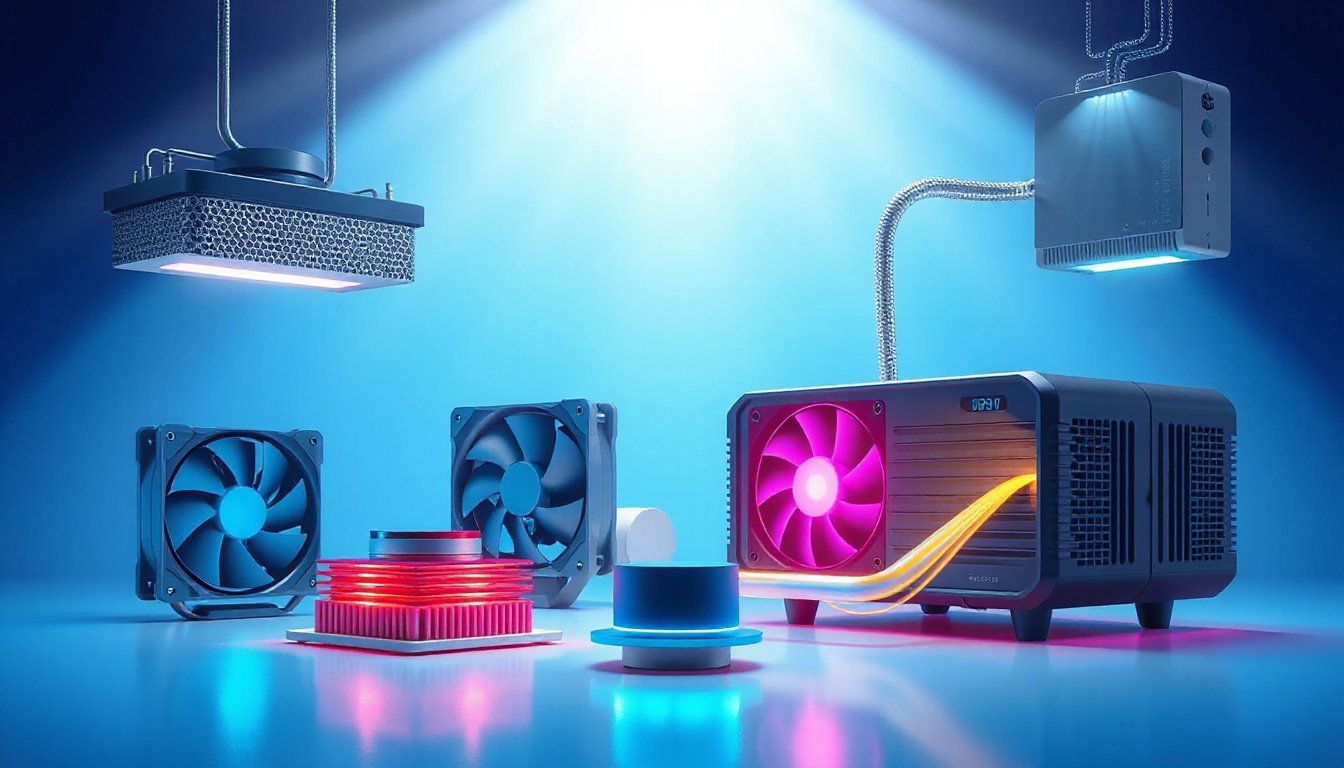
Projectors, especially high-performance models like laser projectors, generate significant heat during operation. Efficient cooling systems are crucial to maintaining optimal performance, preventing damage, and extending the lifespan of projector components. This article explores the main types of projector cooling systems, focusing on their mechanisms, advantages, and challenges, helping you understand the best options for keeping your projector efficient and long-lasting.
Understanding the Need for Effective Projector Cooling
Projectors convert electrical energy into bright visual output, which unavoidably produces heat due to the energy loss in light sources and electronics. In laser projectors used for cinemas, concerts, or large venues, the heat generated can reach hundreds of watts. Without proper cooling, excessive heat can degrade sensitive components like laser diodes, optical elements, and driver electronics, leading to poor image quality, hardware failures, and shorter operational life.
Maintaining steady temperature control, typically within a range of 20°C to 30°C, ensures consistent brightness, sharp image resolution, and prolonged device reliability.
Types of Projector Cooling Systems
1. Thermoelectric Cooling Systems (Peltier Cooling)
How It Works:
Thermoelectric coolers (TECs), or Peltier modules, use the Peltier effect to create a heat flux between two materials, pushing heat from one side to another when electric current is applied. Mounted directly on heat-generating components like laser diodes or laser modules, TECs absorb heat and transfer it to a heat sink or cooling medium.
Applications:
- High-end laser projectors with compact footprints.
- Precise temperature regulation of sensitive laser diodes and optics.
Advantages:
- Quiet operation (no moving parts like fans).
- Precise temperature control at small scales (often less than 100 x 100 mm).
- Compact and adaptable to miniaturized designs.
- Can maintain sub-ambient temperatures crucial for laser stability.
Challenges:
- TECs generate additional heat on the hot side, requiring efficient heat dissipation to prevent overheating.
- Risk of condensation due to cooling below the dew point; necessitates moisture protection through insulation and sealing.
- Potential contamination from outgassing of thermal interface materials, which may degrade optical components; special low-outgassing materials and mounting techniques are recommended.
- Space constraints can limit airflow and heat sink effectiveness.

2. Ambient Liquid Cooling Systems
How It Works:
Liquid cooling systems use circulating coolant (typically water or special thermal fluids) moving through cold plates attached to heat sources. The heated liquid is then transferred to a radiator or heat exchanger where heat is dissipated into the ambient air.
Applications:
- Commercial laser projectors in cinemas and large venues.
- Systems where space near heat-generating elements is limited but more room is available for external heat exchangers.
Advantages:
- Highly efficient heat transfer, capable of handling large heat loads.
- Reduces the size and weight of heat sinks at the source, alleviating space constraints at critical projector components.
- Liquid has a higher thermal capacity than air, improving stability and cooling performance.
- Often paired with thermoelectric coolers for enhanced temperature precision.
Challenges:
- Higher system complexity with pumps, tubing, and potential leak risks.
- Requires maintenance to prevent coolant degradation or contamination.
- Cost and design considerations for integrating fluid circuits into compact projector assemblies.
3. Recirculating Chiller Systems
How It Works:
Chillers actively cool liquid circulated within the projector to maintain low, stable temperatures. They typically incorporate refrigeration cycles and are capable of cooling liquids to temperatures below ambient.
Applications:
- Extremely high-power laser projection systems.
- Industrial or large-scale outdoor projection setups requiring stringent thermal control.
Advantages:
- Can achieve precise temperature control and maintain cooler temperatures than ambient systems.
- Suitable for very high heat loads exceeding air or passive liquid cooling capabilities.
Challenges:
- Complex, expensive, and bulky compared to air or passive liquid cooling.
- Requires careful integration and ongoing maintenance.
- Not ideal for portable or compact projector designs.
4. Air Cooling Systems (Conventional Cooling Fans and Heatsinks)
How It Works:
Most traditional projectors rely on airflow generated by fans passing over heatsinks attached to heat sources to dissipate heat into ambient air.
Applications:
- Standard lamp-based and low-to-medium power projectors.
- Cost-sensitive or compact home theater projectors.
Advantages:
- Simple design, low initial cost, and easy maintenance.
- Effective for projectors with moderate heat generation.
Challenges:
- Fans can introduce noise and dust ingress.
- Limited heat dissipation capacity, unsuitable for high-power laser projectors.
- Airflow can be constrained by compact projector designs, reducing efficiency.
Addressing Common Thermal Management Challenges
-
Condensation Prevention:
Cooling below the dew point can cause moisture buildup detrimental to electronics. Proper sealing, insulation with closed cell foam, and environmental controls are essential to prevent condensation in thermoelectric and liquid cooling systems. -
Outgassing Issues:
Materials used for thermal interfaces or adhesives may release gases over time, contaminating sensitive optical surfaces. Employing low-outgassing materials, baking components before assembly, and meticulous cleaning protocols help maintain image quality. -
Space, Weight, and Power Constraints:
Modern projectors often seek to minimize size and weight while boosting output. High heat flux densities demand compact but powerful cooling solutions, often requiring combined or hybrid cooling methods. -
Temperature Sensor Placement:
Accurate thermal control depends on placing temperature sensors close to the heat source, though space limitations may force positioning on intermediary parts, potentially delaying feedback and affecting regulation performance.
Which Cooling System Is Best?
The choice depends largely on projector type, power output, size constraints, and cost considerations:
-
For high-power laser projectors, ambient liquid cooling paired with thermoelectric coolers offers an excellent balance of precision, reliability, and manageable system complexity.
-
For portable or compact laser projectors, advanced thermoelectric cooling with appropriate insulation provides targeted cooling without bulky liquid systems.
-
For budget or conventional projectors, air cooling with optimized fan and heatsink design remains the standard solution.
-
For extreme performance or environmental conditions, recirculating chillers may be warranted despite higher complexity and cost.
Conclusion
Effective thermal management is vital for ensuring projector efficiency, stable image quality, and device longevity. Understanding the strengths and limitations of different cooling systems empowers manufacturers and users to select or design the optimal solution tailored to specific projector needs. By leveraging thermoelectric, liquid, recirculating chiller, or traditional air cooling systems appropriately—and addressing challenges like moisture and outgassing—projectors can deliver outstanding performance reliably over their service life.