





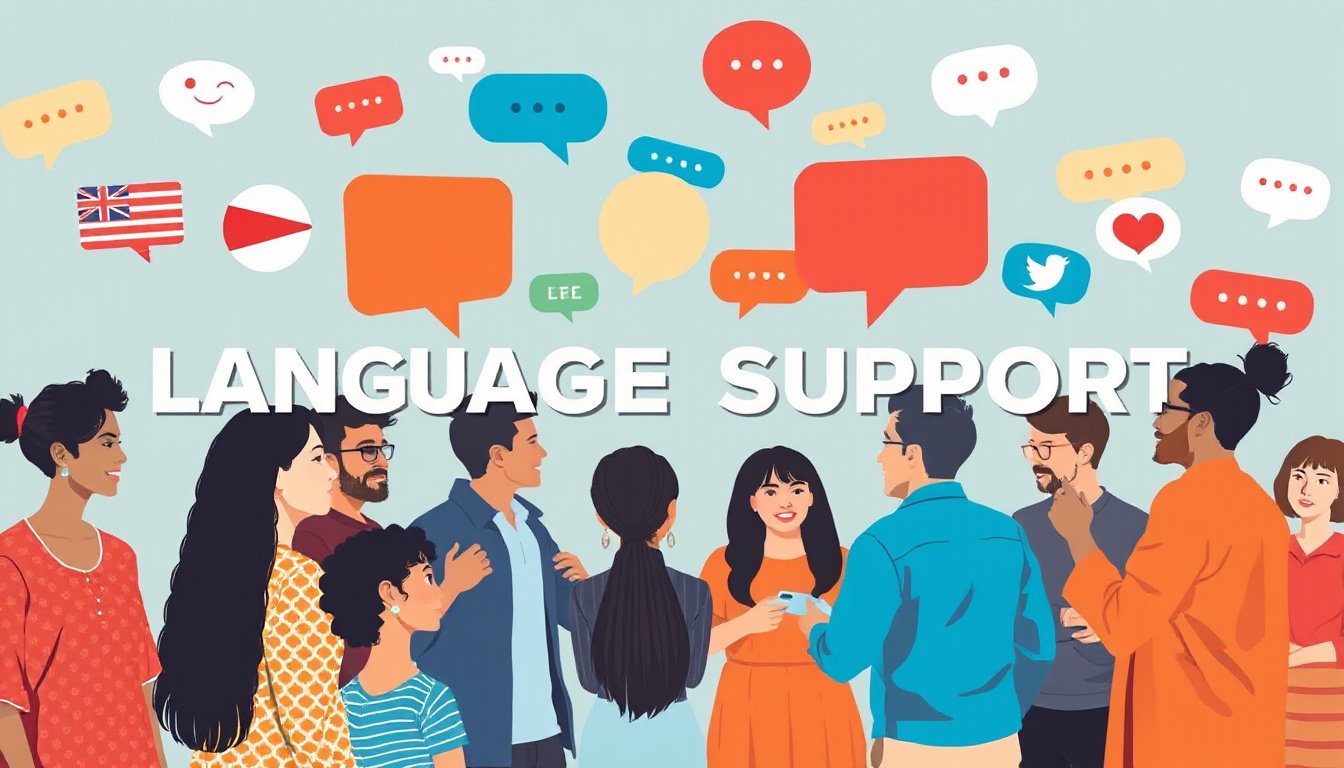
In our increasingly interconnected world, language proficiency is a critical bridge that enables effective communication, fosters mutual understanding, and unlocks opportunities across borders. Language support plays an essential role in empowering individuals and organizations to overcome linguistic barriers, enriching cultural exchange, and facilitating global cooperation. This article explores the multifaceted importance of language support and the various forms it takes in global communication.
The Role and Scope of Language Support
Language support encompasses a broad range of services and tools aimed at helping individuals acquire, improve, or navigate languages in diverse contexts—academic, professional, social, or technological. It addresses challenges faced by non-native speakers or those engaging with multiple languages, ensuring inclusivity and accessibility.
Educational Contexts: Enhancing Academic and Professional Success
A significant domain where language support is indispensable is education. For instance, the Erasmus+ Online Language Support (OLS) program demonstrates how structured language assistance benefits students and volunteers participating in international mobility programs. By providing personalized language assessments and tailored online courses in the languages used during study or volunteering abroad, OLS mitigates language barriers that could hinder academic performance or social integration.
Such programs not only validate participants’ proficiency before departure but also support continuous learning throughout their experience. Importantly, they uphold linguistic diversity by offering courses in all EU official languages and languages of partner countries, reflecting the commitment to multiculturalism.
Similarly, university language support programs, such as Beykent University’s English Language Support Programme, highlight the academic imperative of mastering a foreign language in higher education. These programs target the development of comprehensive language skills—reading, writing, listening, and speaking—to prepare students for academic research, professional communication, and global engagement, thereby contributing to their academic and career advancement.
Technological Advances: Facilitating Instant and Precise Communication
In the digital era, language support has rapidly evolved through advanced technologies like machine translation, natural language processing, and AI-driven tools. Services such as Google Cloud’s Translation API enable real-time translation and language detection across hundreds of languages. These tools support businesses, developers, and users by breaking down language barriers with high fidelity, scalability, and integration flexibility.
The availability of customized translation models and support for underrepresented languages and dialects exemplifies how technology tailors language support to specific needs, including regional variants and niche applications. Features like romanization and transliteration further expand accessibility for scripts unfamiliar to particular users.

Broader Impacts: Bridging Cultures and Opening Doors
Effective language support does more than facilitate communication; it enriches intercultural understanding and cooperation. By enabling people to express themselves clearly and comprehend others, language support reduces misunderstandings, builds trust, and nurtures collaboration across sectors including education, business, diplomacy, and volunteer work.
Moreover, promoting linguistic diversity through language support initiatives safeguards cultural heritage and encourages respect for minority languages, fostering a more inclusive global society where diversity is celebrated rather than viewed as an obstacle.
Challenges and Considerations in Providing Language Support
While language support offers many benefits, challenges remain in ensuring equitable and effective access. These include:
- Diversity of Languages: Supporting the vast number of languages worldwide requires extensive resources and adaptability, especially for lesser-known or endangered languages.
- Quality and Accuracy: Both human-led and technology-based language support must maintain high standards to avoid miscommunication, particularly in critical contexts like legal, medical, or educational settings.
- Accessibility: Bridging digital divides and ensuring language support tools are available to underserved populations is essential for truly inclusive communication.
Conclusion
Language support is a vital enabler of global communication and cooperation. Through education programs that enhance proficiency, technological solutions that transcend linguistic boundaries, and initiatives that celebrate linguistic diversity, language support unlocks potential for individuals and societies alike.
As globalization continues to bring diverse cultures and languages into contact, investing in comprehensive and accessible language support systems is essential. It empowers individuals to thrive academically and professionally, facilitates seamless exchange of ideas, and fosters a more connected and understanding world.