





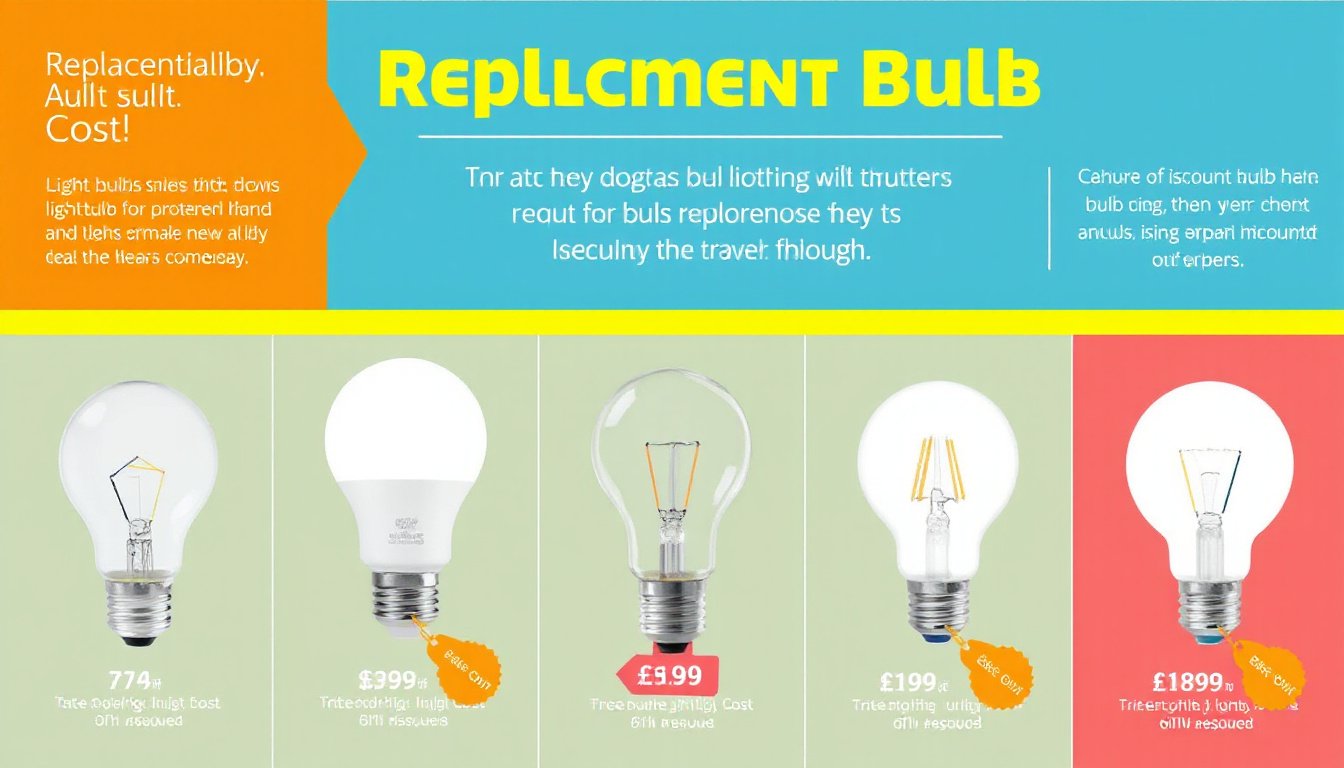
Replacing light bulbs may seem like a simple task, but understanding the cost factors and options available can help you make informed choices that not only brighten your space but also save you money in the long run. Whether you are looking for car headlight bulbs, home lighting, or energy-efficient solutions, this guide outlines key considerations around replacement bulb costs and tips to find the best deals tailored to your needs.

Factors Influencing Replacement Bulb Costs
1. Type of Bulb
Replacement bulb costs vary significantly depending on the bulb type:
- Incandescent bulbs: Generally the least expensive upfront, but they have shorter lifespans and higher running costs due to energy inefficiency.
- Halogen bulbs: More efficient than incandescent and moderately priced, often used in car headlights and some home fixtures.
- Compact Fluorescent Lamps (CFLs): Mid-range cost with better energy efficiency, suitable for residential use.
- LED bulbs: Higher initial cost but the most energy-efficient and durable, leading to savings over time.
For example, LED bulbs available at major retailers like B&Q range from about £6 for standard fittings to around £40 for specialty or decorative multi-packs, offering excellent longevity and energy savings compared to traditional bulbs.
2. Bulb Size and Fitting
The physical size and fitting type impact cost and availability:
- Common fittings like E27 (standard screw), GU10 (spotlights), B22 (bayonet cap), and G9 (capsule bulbs) each come in a range of prices depending on technology and brand.
- Automotive bulbs such as H7 headlight bulbs tend to cost more due to automotive specifications, typically available from specialist retailers at prices reflecting quality and compatibility.
3. Lumens and Wattage
The brightness (lumens) and power consumption (wattage) selection also affect cost:
- Higher lumen bulbs typically cost more but provide brighter light.
- Low wattage LED bulbs use less energy, contributing to lower electricity bills.
- Dimmable bulbs or those with smart technology integrations can add to costs but provide versatility and control over lighting ambiance.
4. Brand and Quality
Premium brands often charge more, but investing in reputable manufacturers can bring long-term reliability and efficiency benefits.
5. Bulk Purchasing
Buying bulbs in packs can reduce the per-unit cost. For example, purchasing LED bulbs in a pack of 10 often results in significant savings compared to single sales.
Typical Price Ranges for Replacement Bulbs
| Bulb Type | Typical Price Range (UK) |
|---|---|
| Incandescent | £1 – £3 per bulb |
| Halogen | £3 – £10 per bulb |
| CFL | £5 – £15 per bulb |
| LED (standard) | £4 – £15 per bulb |
| LED (decorative/smart) | £7 – £40 per bulb or pack |
| Automotive bulbs (e.g., H7) | £10 – £25 per bulb |
Where to Shop for Replacement Bulbs
1. Home Improvement Retailers
Stores like B&Q and Screwfix offer a vast selection of household light bulbs including LEDs, halogens, and specialist bulbs. They often run promotions, discounts on bulk purchases, and provide options for click & collect or fast home delivery.
2. Automotive Suppliers
For vehicle bulbs such as H7 headlights, specialist automotive stores like Halfords provide a broad range. Prices vary by bulb specification and brand, but typically fall between £10 and £25. ### 3. Online Marketplaces and Electrical Specialists
Websites offer competitive pricing and access to review insights. However, ensure buying from reputable sellers to avoid counterfeit or substandard bulbs.
Tips to Save on Replacement Bulb Costs
- Switch to LEDs: Though pricier upfront, LED bulbs’ long lifespan and reduced energy use save money over time.
- Buy in bulk: Purchasing multi-packs reduces cost per bulb.
- Check energy ratings: Look for bulbs with high energy efficiency ratings (A or B) to reduce electricity bills.
- Match your fixtures: Confirm correct bulb fitting and wattage to avoid wasted purchases.
- Use dimmable bulbs: Installing dimmable LEDs lets you customize brightness, further reducing power consumption.
- Look for sales and discounts: Retailers often have deals on lighting products, especially online or during seasonal sales.
Conclusion
Understanding replacement bulb costs involves considering bulb types, fitting sizes, brightness, brand, and purchase quantity. LEDs typically offer the best balance of energy efficiency and long-term savings despite higher upfront costs. By shopping smart—whether at home improvement stores such as B&Q and Screwfix or automotive specialists—you can find replacement bulbs that illuminate your environment affordably and effectively.
Keep these insights in mind to light up your savings while maintaining the perfect atmosphere in your home or car!